
Converting a Tennis Court to Pickleball: What It Takes
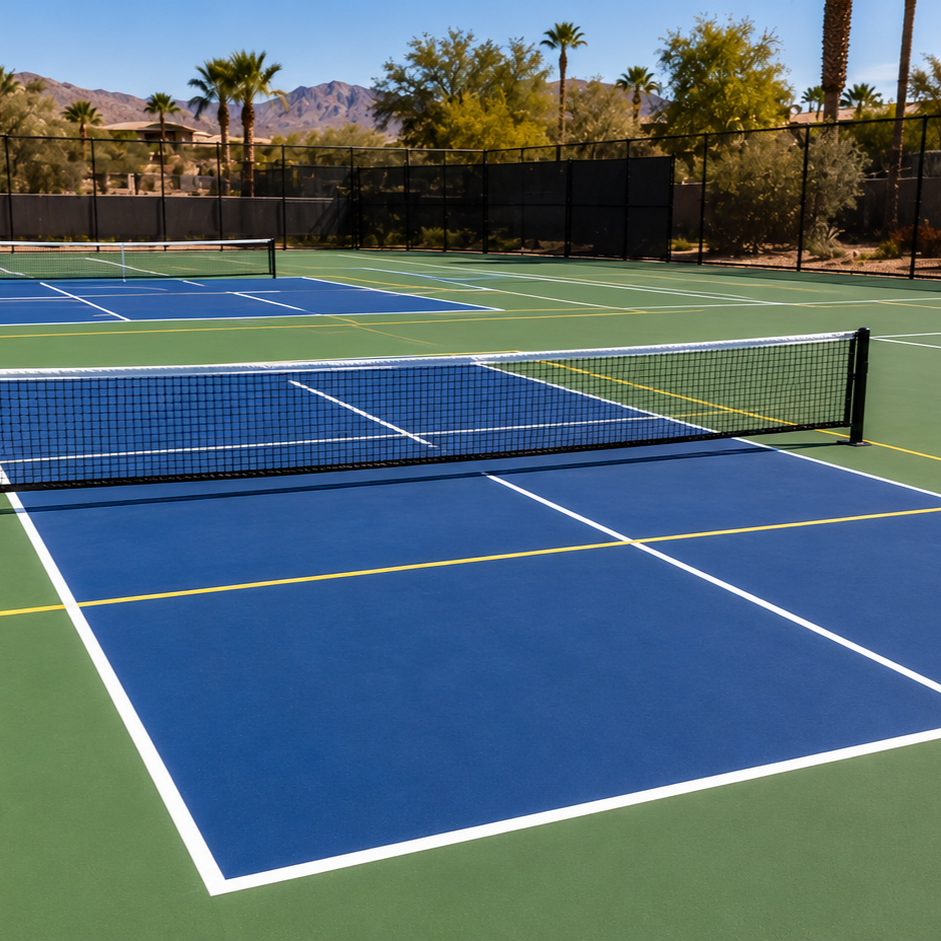
Quick Answer: You have three real options: paint blended pickleball lines onto the existing tennis court for shared play, add portable nets and lines for casual use, or fully resurface and restripe the court as dedicated pickleball. A regulation tennis court can hold up to four dedicated pickleball courts, or two with blended lines while tennis stays playable. A pickleball court's playing area is 20 by 44 feet, and the choice comes down to whether tennis stays in the picture and how much you'll play.
That tennis court out back doesn't get used the way it once did, and every weekend the pickleball courts across town have a waiting list. The math is obvious — but turning one into the other is more than painting a few lines, and how you do it depends on whether you ever want to play tennis there again. Here's what's actually involved, from a quick shared-use striping to a full dedicated conversion.
Start With the Dimensions
A pickleball court is small. The playing area is 20 feet wide by 44 feet long — the same footprint as a doubles badminton court — with a net 36 inches high at the sidelines and 34 inches at the center, and a seven-foot non-volley zone (the "kitchen") on each side of the net. For comfortable play, you want more than just the lines: the recommended total surface is at least 30 by 60 feet per court, with 34 by 64 feet preferred, to leave room to chase a ball without running into a fence.
A regulation tennis court runs 60 by 120 feet overall, and that's why the conversion works so well: there's room to fit up to four dedicated pickleball courts on a single tennis court, two on each half. If you want to keep tennis playable and just add pickleball, the standard is two blended-line pickleball courts laid over the tennis court instead.
The Three Ways to Convert
| Option | What it involves | Best for |
|---|---|---|
| Blended lines (shared use) | Paint pickleball lines over the tennis court; keep the tennis net or add portable nets | Keeping tennis and adding pickleball |
| Portable setup | Tape or temporary lines plus portable pickleball nets | Casual, low-commitment play |
| Dedicated conversion | Resurface, restripe for pickleball only, set permanent net posts | Heavy pickleball use, clubs, HOAs |
The lightest touch is blended lines. You keep the tennis court intact and add a second set of lines for pickleball, using the existing net or dropping in portable nets at the right height. The guidance here matters: the tennis lines stay white, and the pickleball lines should be textured paint in a shade that contrasts but stays within the same color family as the surface, so players can tell the two sports' lines apart without the court looking like a plate of spaghetti.
The fullest option is a dedicated conversion — resurfacing the court, striping it for pickleball alone, and setting permanent net posts in the right positions. It's the most work and cost, but it gives clubs, HOAs, and heavy players the cleanest experience, with proper net heights and no competing lines.
Why Surface Prep Comes First
Whichever route you choose, you can't just paint over a tired court. Acrylic color-coat systems — the standard for these surfaces — need a sound base to bond to, so the real work happens before the lines go down. Cracks get repaired, low spots that hold puddles get filled, and the surface is cleaned and recoated before anything is striped. Skip that, and the new lines crack and peel along with the old surface within a couple of seasons. Fencing and drainage matter, too: backstops keep stray balls from leaving the court, and a surface that sheds water rather than pooling lasts far longer between resurfacings. A proper resurfacing is what makes the conversion last, not just look good on day one.
The Desert Factor: Color and Resurfacing Cycle
Out here, two things deserve extra thought. First, color. Darker court colors absorb more heat and get hotter underfoot, so a lighter surface color plays cooler in the Coachella Valley and Las Vegas sun — and the surface color should still contrast with the ball so players can track it. Orienting the courts north-south also reduces the number of players staring into the sun. Second, the resurfacing cycle. Intense heat and UV fade and wear the color coat faster here than in milder climates, so these courts generally need resurfacing every five to seven years to stay crack-free and true. Building that into the plan from the start keeps a converted court playable for the long haul.
Frequently Asked Questions
Up to four dedicated pickleball courts fit on a single regulation tennis court — two on each half. If you want to keep the court playable for tennis and just add pickleball with blended lines, the standard is two pickleball courts overlaid on the tennis court. The right number depends on whether tennis stays in the mix and how much buffer space you want around each court.
The playing area is 20 feet wide by 44 feet long, with a non-volley zone (the kitchen) extending 7 feet from the net on each side. The net is 36 inches high at the sidelines and 34 inches at the center. For comfortable play, the recommended total surface, including run-off room, is at least 30 by 60 feet per court.
Yes — that's the blended-line, shared-use option, and it's the most affordable. You keep the tennis court and add a second set of pickleball lines, using the existing net or portable nets. The key is doing it right: pickleball lines in a contrasting but same-family color so they don't clash with the white tennis lines, and ideally on a sound, recently resurfaced court.
If the court has cracks, puddling, or a worn coat, yes. Acrylic surfacing needs a sound base to bond to, so cracks and low spots are repaired, and the court is recoated before striping. Painting fresh lines over a failing surface just means the new lines fail with the old surface. A court in good shape may only need restriping.
In the desert heat and UV, plan to resurface every 5 to 7 years to keep the surface crack-free and the color true. Sun and heat wear the acrylic coat faster than in milder climates. Lighter colors and good drainage help, but the resurfacing cycle is a normal part of owning an outdoor court here.
Blended lines add pickleball to a court that's still primarily tennis — cheaper, faster, but you're playing around two sets of lines. A dedicated conversion resurfaces and stripes the court for pickleball only, with permanent nets at the correct height, for the cleanest play. Heavy users and clubs usually prefer dedicated; households adding occasional pickleball often go blended.
Match the Conversion to How You'll Play
Turning a tennis court into pickleball can be as simple as a second set of lines or as complete as a full resurface and restripe — and the right choice is really a question about how you'll use it. Keep tennis and play pickleball sometimes? Blended lines. All pickleball, all the time? Go dedicated. Either way, sound surface prep and a smart color choice for the heat are what separate a court that lasts from one you're fixing in two years.
Thinking about turning a tennis court into pickleball? — Get a plan for layout, lines, nets, and a heat-smart surface built to last in desert sun. CourtMaster Sports, Inc. serves the Coachella Valley and Las Vegas. Call (760) 548-3535.
