
Hard Court vs Cushioned Acrylic: Which Plays Better?
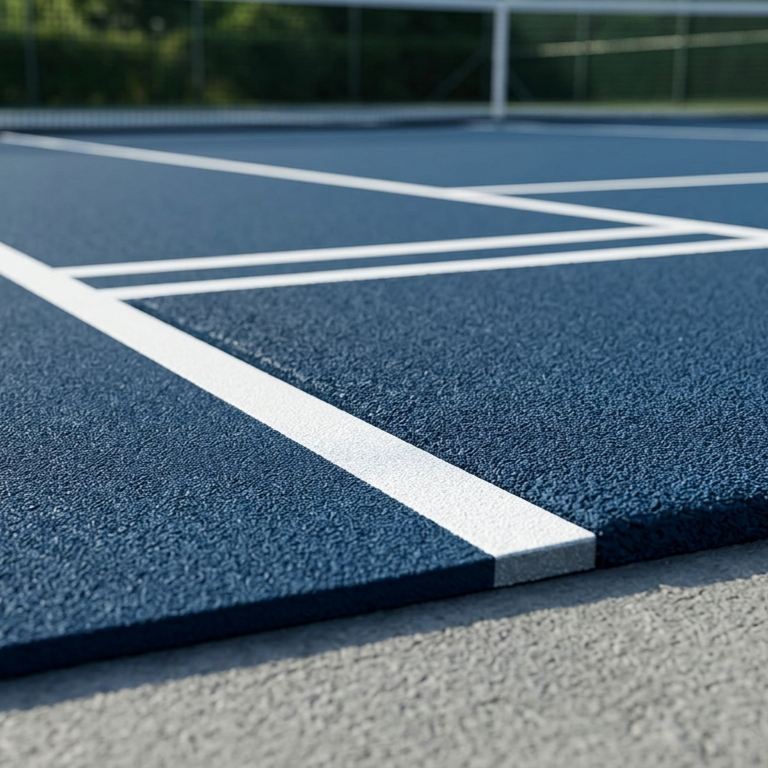
Quick Answer: A standard hard court is an acrylic surface applied directly over the concrete or asphalt base, giving a firm, fast, consistent playing surface with little give. A cushioned acrylic court adds resilient layers beneath the color coating, providing cushioning underfoot that's easier on the joints and bodies of players, with a slightly softer feel. Neither plays "better" universally — it depends on priorities. Hard courts offer a firm, traditional, lower-maintenance surface preferred by some players for speed and feel; cushioned courts offer comfort and reduced impact, valued by those who want to be easier on knees, hips, and backs. The choice comes down to playing feel versus comfort and how the court will be used.
When building or resurfacing a court, one choice that shapes how it feels to play is whether to go with a standard hard court or a cushioned acrylic surface. Both are acrylic systems, but they play differently — one firm and fast, the other softer and easier on the body. Understanding the difference helps you choose the surface that fits how you and your players want the court to feel.
What Each Surface Is
A standard hard court is an acrylic color coating system applied directly over the concrete or asphalt base, with little to no cushioning layer. The result is a firm, hard playing surface — the classic, familiar court feel.
A cushioned acrylic court adds resilient, rubberized cushioning layers between the base and the color coating. These layers give the surface some "give," cushioning the impact of running, jumping, and play. So while both have an acrylic playing surface on top, the cushioned court has padding underneath that the hard court lacks. That structural difference — direct-over-base versus cushioned layers —drives the differences in feel and the trade-offs between them.
How They Play and Feel
The most noticeable difference is underfoot. A hard court feels firm and solid, with minimal give. Many players prefer this for its fast, consistent, traditional playing characteristics — the surface is responsive and predictable, and the firmness is part of the classic game feel. It's the surface a lot of players are used to.
A cushioned court feels softer, with noticeable give that absorbs impact. This makes it more comfortable to play on and easier on the body — the cushioning reduces the jarring impact transmitted to players' joints. The trade-off is a slightly different, softer playing feel compared to the firm response of a hard court. So the core difference is firm, fast, and traditional (hard court) versus soft, comfortable, and forgiving (cushioned).
| Factor | Hard Court | Cushioned Acrylic |
|---|---|---|
| Construction | Acrylic directly over base | Cushioning layers under coating |
| Feel | Firm, solid, fast | Softer, with give |
| Joint comfort | Less forgiving | Easier on joints and body |
| Playing characteristics | Traditional, responsive | Slightly softer response |
| Best for | Speed, feel, lower upkeep | Comfort, reduced impact |
The Comfort Factor
Where cushioned courts really stand out is in player comfort and reducing impact on the body. The cushioning absorbs some of the force of running, stopping, and jumping, which can be easier on the knees, hips, ankles, and back. For players who deal with joint discomfort, those who play frequently, or in contexts where reducing impact on bodies is a priority, this comfort advantage is significant. A hard court, by contrast, transmits more of that impact directly to the player. So if minimizing wear and tear on the body is a goal, the cushioned surface has a clear edge — this is often the deciding factor for people who choose cushioned over hard.
Which Plays Better?
The honest answer is that neither plays better universally — it depends on what you value. If you prioritize a firm, fast, traditional playing surface with responsive characteristics, and perhaps simpler maintenance, a hard court is excellent and is what many players prefer. If you prioritize comfort, joint protection, and reduced impact — being easier on players' bodies — a cushioned acrylic surface plays better for those goals. So "which plays better" really means "which suits how you want the court to feel and who is playing on it." A competitive player wanting speed and classic feel may lean towards hard court; a household, frequent players, or anyone mindful of joints may prefer cushioned.
Think about who will use the court and how often. For frequent play, or for players mindful of their knees, hips, and backs, the cushioning of an acrylic cushioned surface pays off in comfort. For those who want the firm, fast, traditional feel above all, a hard court delivers it. Matching the surface to the players is what makes a court feel right.
How to Choose
The decision comes down to your priorities for feel, comfort, and use. Choose a hard court if you want a firm, fast, traditional surface with responsive play and don't need cushioning. Choose a cushioned acrylic surface if comfort and reduced impact on the body are important, accepting a slightly softer playing feel for that benefit. Consider who will be playing, how often, and whether joint comfort is a priority. Because both are quality acrylic surfaces that differ mainly in feel and cushioning, the right choice is the one that matches how you want the court to play and who it's for. A court professional can show both and help you weigh playing feel against comfort for your specific needs.
Frequently Asked Questions
A hard court is an acrylic surface applied directly over the concrete or asphalt base, giving a firm, fast surface with little give. A cushioned acrylic court adds resilient cushioning layers beneath the color coating, providing give that's easier on the body. Both have an acrylic playing surface, but the cushioned court has padding underneath that the hard court lacks.
The cushioned acrylic surface. Its cushioning layers absorb some of the impact of running, stopping, and jumping, reducing the force transmitted to players' knees, hips, ankles, and backs. A hard court transmits more of that impact directly. So for players mindful of joint comfort or those who play frequently, the cushioned surface is the more forgiving, body-friendly choice.
A hard court has a firm, solid feel with minimal give that many players associate with a fast, responsive, traditional playing surface. A cushioned court gives a slightly softer feel. So the hard court offers the firm, classic characteristics some players prefer, while the cushioned court trades a bit of that firmness for comfort. Which is "better" depends on your priorities.
It depends on your priorities. If comfort and reducing impact on the body are important — for frequent players, those with joint concerns, or contexts prioritizing player comfort — the cushioning is a significant benefit and worth it. If you prefer a firm, fast, traditional surface and don't need cushioning, a hard court may suit you better. The value comes down to whether comfort or firm playing feel matters more.
Both are acrylic surfaces that need periodic resurfacing to maintain color and condition. A hard court's simpler construction can mean more basic upkeep, while cushioned courts have additional resilient layers. Both require maintenance over time, and a court professional can explain the upkeep for each. Maintenance is generally a secondary factor next to the playing feel and comfort difference between them.
Consider who will play and what you value. Choose a hard court for a firm, fast, traditional surface; choose cushioned for comfort and reduced impact on the body. Think about playing frequency and whether joint comfort is a priority. Both are high-quality acrylic surfaces, differing mainly in feel and cushioning, so the right choice depends on how you want the court to play and who it's for.
Match the Surface to How You Play
Hard courts and cushioned acrylic courts are both quality acrylic surfaces, differing mainly in feel: hard courts are firm, fast, and traditional, while cushioned courts add give that's easier on the joints and body. Neither plays better universally — it depends on whether you prioritize firm playing characteristics or comfort and reduced impact. Consider who's playing and how often, and the right surface for your court becomes clear.
Deciding between a hard and cushioned court surface? — Get guidance on the feel and comfort that fit how you'll play. CourtMaster Sports, Inc. serves the Coachella Valley and Las Vegas. Call (760) 548-3535.
