
How Long Does an Acrylic Court Really Last in Extreme Heat?
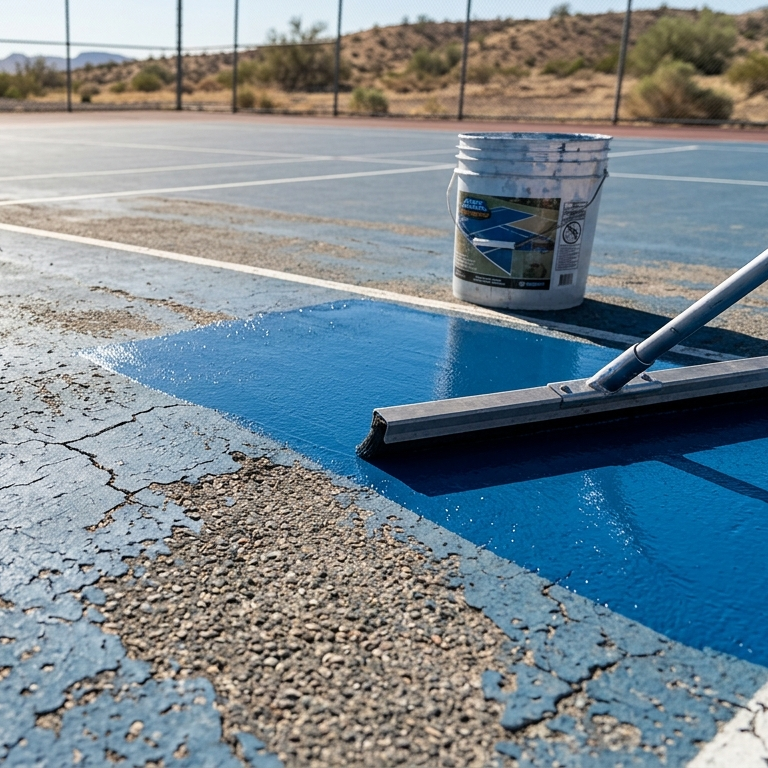
Quick Answer: An acrylic court's color-and-texture coating system typically needs resurfacing every several years, while the asphalt or concrete base underneath can last decades if it stays sound. In extreme desert heat, intense UV, and big temperature swings, the acrylic coatings wear and fade faster, so courts in places like the Coachella Valley and Las Vegas tend to land at the shorter end of the resurfacing cycle. Good base prep, quality coatings, and routine maintenance are what stretch the life in harsh sun.
When people ask how long an acrylic court lasts, they are really asking two questions, because a court has two lifespans: the coating on top and the base underneath. The base can serve for decades. The acrylic surface — the part that gives you the color, the texture, and the playing speed — wears out faster and gets recoated periodically. In extreme heat, that surface cycle is exactly what the sun shortens, so knowing what drives it helps you plan and protect your investment.
Two Lifespans: Coating vs. Base
The acrylic system consists of thin coatings applied over a paved base of asphalt or concrete. Those coatings take all the direct abuse — foot traffic, ball wear, sun, and weather — so they're the part that periodically needs renewing through resurfacing. The base beneath is the structural foundation, and if it was built well and stays sound, it can last for decades, with only the surface coatings refreshed on top of it over the years.
So "how long does it last" splits in two: the coatings need resurfacing every several years, while the base is a long-term asset. Extreme heat mainly attacks the coatings.
What Extreme Heat Does to the Surface
Desert conditions are about as demanding as it gets for an outdoor court, and they speed up surface wear in a few ways:
- UV exposure fades the color and gradually breaks down the acrylic coatings, so a court in relentless sun loses its look and surface integrity faster than one in a mild climate.
- Heat and big day-to-night temperature swings make the base and coatings expand and contract repeatedly, and that constant movement stresses the surface and can work at cracks over time.
- Intense sun and heat simply age the coatings faster, so the practical result is a shorter interval between resurfacings than the same court would need in a temperate climate.
None of this means the court fails early — it means the resurfacing cycle runs a bit tighter, and staying on top of it matters more.
What Makes a Court Last Longer in the Heat
The biggest factor in how long a court holds up is how well it was built and how it's maintained. A few things make the difference:
| Factor | Why it matters in extreme heat |
|---|---|
| Base preparation | A sound, properly built base resists cracking through heat cycling |
| Coating quality | Quality acrylic systems hold color and resist UV longer |
| Crack maintenance | Sealing cracks early stops heat and water from widening them |
| Routine cleaning | Removing debris and rinsing keeps the surface from degrading |
| Timely resurfacing | Recoating on schedule protects the base and restores the surface |
The single most important one is the base. A well-prepared base that doesn't crack under heat cycling is what lets the surface coatings do their job and be renewed cleanly for decades. After that, using quality coatings, sealing any cracks before the sun and heat widen them, keeping the court clean, and resurfacing on schedule all extend the life. A court that's neglected in the desert ages much faster than one that's maintained, regardless of how well it started.
There's a real cost argument for staying ahead of it, too. Resurfacing on schedule is a routine, planned expense, while letting a court go too long invites problems that are far more expensive to fix — coatings that wear through to the base, cracks that widen and spread, and water intrusion that can damage the base itself. Once the base is compromised, you're no longer talking about a surface refresh but a much bigger reconstruction. So the courts that cost the least over their lifetime are usually the ones whose owners treated maintenance and timely resurfacing as part of owning the court, especially in a climate this hard on surfaces.
Usage plays a part as well. A heavily used court — a club, a school, or a busy home court in constant play — wears its surface faster than one used occasionally, independent of the weather. Combine heavy play with desert sun, and the resurfacing interval tightens further, which is simply something to plan for rather than be surprised by. The point isn't that desert courts are a poor investment — plenty of them give many years of great play — it's that the planning horizon for resurfacing is shorter here than in a mild climate, and budgeting for that from the start keeps the court in top shape without any unwelcome surprises.
Frequently Asked Questions
The acrylic coating system typically needs resurfacing every several years, with the exact interval depending on use, climate, and maintenance. In extreme heat and intense sun, courts tend to land at the shorter end of that range because UV and temperature swings wear the coatings faster. The base underneath, if sound, lasts much longer and only needs the surface refreshed.
It shortens the surface coatings' life, yes. Intense UV fades and breaks down the acrylic, and repeated heat-and-cool cycling stresses the surface and works at cracks. The structural base isn't aged the same way and can last decades if built well. So extreme heat mainly means a tighter resurfacing cycle for the coatings, not necessarily early failure of the whole court.
The base, by far, when it's properly built. The base is the structural foundation and can serve for decades, while the acrylic coatings on top wear from use, sun, and weather, and need periodic resurfacing. That's why court longevity depends so heavily on quality base preparation — a sound base lets you renew the surface again and again over its life.
Start with a well-prepared base and quality coatings, then maintain it: seal cracks early before heat and water widen them, keep the surface clean of debris, and resurface on schedule rather than waiting until it's badly worn. Timely upkeep protects the base and keeps the surface playable. A maintained court in the desert outlasts a neglected one by a wide margin.
Cracks are worth addressing promptly, especially in extreme heat. Once a crack forms, the daily expansion and contraction from heat cycling, plus any water that gets in, tend to widen it over time. Sealing cracks early is far easier and cheaper than letting them grow into a problem that compromises the surface or the base. Regular inspection catches them while they're small.
Plan for the Cycle, Protect the Base
An acrylic court doesn't have a single expiration date — its surface is renewed every several years, and its base can last decades. Extreme desert heat and sun mainly speed up the surface cycle, so courts here resurface a little more often. The way to get the most years out of it is to start with a quality base and coatings and then keep up with cracks, cleaning, and resurfacing. Maintain the surface, protect the base, and the court rewards you for a long time.
Wondering if your court is due for resurfacing? — Get it assessed and a maintenance plan built for desert heat. CourtMaster Sports, Inc. serves the Coachella Valley and Las Vegas. Call (760) 548-3535.
