
Fencing and Windscreens: Why Wind Load Comes First
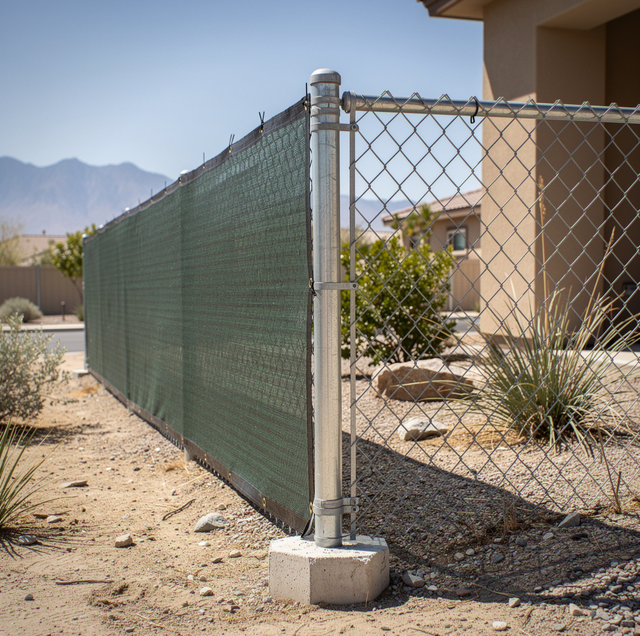
A windscreen is not a curtain. The moment fabric goes up along a chain-link fence, that fence line stops behaving like an open, air-permeable barrier and starts behaving like a sail, a surface built to catch wind rather than let it pass through. Every decision that follows, from post size to fabric weave, exists to answer one question: What happens to that load once the fence is asked to carry it?
Why a Windscreen Changes What the Fence Has to Do
Wind pushes a ball off its line, drives dust and debris across the court, and turns a simple rally into a guessing game. It also leaves players on an open fence line with no shelter from glare or a clear sightline to whatever sits on the other side. A windscreen is requested to solve exactly those problems: cut the crosswind, block glare, add privacy, and give the enclosed area a calmer feel.
The trade-off that follows: Once fabric covers the fence, wind that used to move freely through the open diamonds of the chain-link has nowhere to go but against the surface. The fence line ceases to be a permeable barrier and becomes a load-bearing plane, and that shift is what every other decision in this article responds to.
The Load a Screen Transfers Into the Fence, and How Porosity Changes It
A windscreen's fabric is woven or knitted with a certain amount of open area between the fibers, small gaps that let some air pass through rather than forcing all of it around the panel. That open-area percentage is the single biggest variable in how much load the screen actually transfers into the fence. A screen with more open area still behaves somewhat like the chain-link underneath it, letting wind bleed through. A screen with less open area, a tighter weave or a heavier knit, blocks more wind (which is exactly why it's wanted), but it also converts more of that wind into direct pressure on the posts and footings holding it up.
| Screen Type | What It Blocks | What It Loads Onto the Fence |
|---|---|---|
| Open chain-link, no screen | Nothing beyond the ball itself | Point loads only; wind passes through the mesh |
| Knitted HDPE privacy mesh | Sightlines and a portion of glare and wind | Partial wind load, shared between the fabric's open area and the fence |
| Solid vinyl-coated polyester | Sightlines, glare, and most wind | Near-full wind pressure across the entire panel |
Choosing porosity is the first real engineering decision in a windscreen project. It's a trade-off between how much wind, glare, and sightline the screen blocks, and how much structure has to be built underneath it to hold it up. The specific open-area percentage that fits a given site comes from the manufacturer's fabric specification and the site assessment, not a rule of thumb.
Post Size, Spacing, and Footing Depth Carry the Load
Whatever load the fabric's porosity sends into the fence has to be carried by the posts and the concrete they're set in. Line posts run along the straight sections and typically carry less individual force than terminal and corner posts, which anchor the ends, gates, and direction changes and take on the pull of an entire tensioned run. When a solid or near-solid screen goes up, that difference matters more, because every post in the line is now resisting continuous wind pressure rather than the occasional point load an open mesh fence sees.
What actually carries the load: Post spacing, post diameter, and footing depth and diameter all have to be sized together for the wind pressure a given screen creates on a given site, with the right combination coming out of the engineered design for that specific fence line rather than carrying over from one property to the next. Soil conditions play into it too, since a footing set into loose or sandy ground needs different bearing capacity than one set into denser soil.
Fence Fabric and Framework: Mesh, Top Rail, and Tension Cable
The chain-link fabric itself factors into how the system handles a windscreen, mainly through its mesh opening and gauge, the size of the diamond openings, and the thickness of the wire. A tighter mesh with a smaller opening already blocks more open air than a coarse mesh, so it's carrying some of the added load before a screen is even considered; that interaction is part of what the site assessment and manufacturer specification account for.
Top rail versus tension cable: The horizontal member running along the top of the fence line also changes how a windscreen loads the structure. A top rail, a rigid pipe along the top, gives the fabric and screen a stiff edge to attach to and helps spread uplift along its length. A tension cable, a steel cable run through the fabric instead of a rigid pipe, is lighter and simpler to run but flexes more under load, which shifts more of the wind force onto the ties and posts rather than spreading it along a rigid member. Which one belongs on a windscreen-carrying fence is a decision the installer makes based on the chosen fabric and the site's exposure.
Attachment and Hem Detail: Grommets, Ties, and the Bottom Edge
Every windscreen attaches to the fence at a series of points, and those points are where the load actually transfers from fabric to frame. Reinforced hems, a doubled or webbed edge sewn around the perimeter of the panel, keep the fabric from tearing at each attachment point, and grommets set into that hem give ties or lacing cord something durable to pass through. The spacing between grommets is part of the engineered design; closer spacing distributes the load across more attachment points, while wider spacing puts more strain on each attachment point, and the right spacing comes from the fabric manufacturer's specification for that product and site.
Why the bottom edge is sometimes left loose: On some installations, the bottom of the screen is left unattached or fitted with vents rather than laced tight to the fence. A fully sealed bottom edge turns the whole panel into a more solid, uninterrupted surface, which increases uplift and wind loads across the entire fence line. Leaving the bottom free, or adding vent strips, bleeds off some of that pressure before it reaches the posts and footings, a trade-off between a cleaner look and a lower load.
A fence built for open chain-link isn't automatically strong enough to carry a solid windscreen. An undersized post or shallow footing can fail under sustained wind load. Hanging, re-tensioning, or taking down screen panels is installer work, not a homeowner job.
Material and How Each One Fails
The two materials most commonly used for windscreen fabric fail in different ways, and knowing which failure mode applies helps set realistic expectations for upkeep. Vinyl-coated polyester is a woven fabric with a vinyl coating over polyester yarn; its typical failure is the coating cracking or peeling as UV exposure breaks down the vinyl over years in the sun, eventually leaving the underlying weave brittle and prone to tearing. Knitted HDPE (high-density polyethylene) is knit rather than woven, which gives it some stretch and makes it more resistant to tearing once a small puncture starts. However, the raw fiber is also subject to UV degradation over time, though through a different mechanism than a coated fabric.
Where both materials actually give out first: In practice, it's rarely the open field of the fabric that fails first. It's the grommets and ties. Repeated flutter in wind works the fabric back and forth against every tie and grommet, and that constant abrasion wears through the reinforced hem or frays the lacing cord well before the rest of the panel shows comparable wear. Keeping a simple record of when those points were last checked makes it easy to catch that abrasion early, before a loosening panel becomes a section that tears loose in a storm.
Maintenance and the Removable-Panel Question
Windscreen fabric doesn't need much upkeep beyond periodic inspection, but that inspection matters: checking ties and grommets for abrasion, looking for UV-related stiffening or cracking in the fabric, and confirming the panel is still tensioned the way it was installed. A screen that's sagging or loose at several points is carrying wind less predictably than one that's properly secured, which changes the load it puts on the fence even if the fence itself hasn't changed.
A screen can look intact from a few feet away while it's already failing at the grommets and ties. Check those attachment points directly, by hand, rather than judging the panel's condition by its overall appearance from the ground.
Removable or reefable panels: Some installations use screen systems designed to come down, or be partially released, ahead of forecast high-wind events, trading a period of open, unscreened fence for a lower risk of damage during the worst of the weather. Whether that's worth building into a design depends on how exposed the site is and how often severe wind is a realistic concern. Screen fabric left up through a full range of seasonal conditions, not just wind events, accumulates UV exposure and flex fatigue regardless of the time of year, so the removal question is about wind risk specifically, not a general seasonal changeover.
What a Site Assessment Actually Measures
Every trade-off above- porosity against exposure, post capacity against fabric type, hem detail against uplift- gets resolved by an actual site assessment rather than a standard formula. That assessment looks at the height and orientation of the existing or planned fence line, how exposed the site is to prevailing wind, the fabric being requested, and what's around the property that could funnel or block wind before it reaches the fence. The output is an engineered design specific to that fence line, confirmed against the fabric manufacturer's specification, and it's what actually sets post spacing, footing depth, mesh selection, and fabric porosity, not a table of standard figures.
Treat a windscreen as what it is: a sail hung on a fence built to hold it. The right combination of posts, footings, fabric, and attachment detail comes from evaluating the specific site and the screen being requested, not from assuming an existing fence line is already strong enough for whatever fabric goes up next.
Frequently Asked Questions
Sometimes, but not automatically. An existing chain-link fence built for open mesh only was engineered for that load, not for a solid or near-solid screen. Retrofitting often means adding knee braces or additional line posts to bring the structure up to what the new fabric will demand, rather than simply hanging the screen on posts that were never sized for it.
Not usually. The side facing the sun for more of the day typically fades or chalks first, while the shaded face of the same panel can still look close to new. On a fence line running east to west, that uneven fade often shows up as a visible color difference between the two faces well before the fabric is otherwise due for replacement.
Yes. A screened gate leaf transfers wind load to its hinges and latch hardware rather than to a footing, as a fixed panel does, so those connections are sized separately for that added strain from the rest of the run. A gate carrying a screen also needs enough clearance to swing without the fabric catching or dragging once it's tensioned.
Basic zip ties work for light-duty or temporary panels, but many installers use double-wrapped ties or hog-ring fasteners at the reinforced grommets for anything meant to stay up through real wind exposure. A single-wrap tie is more likely to slip or work loose as the fabric flutters, while a double-wrapped or crimped fastener holds through repeated movement.
It can, but screening both faces of a fence line roughly doubles the wind load that section has to carry compared with a single screen, since wind pressure builds against both surfaces rather than one. That configuration is only appropriate when the posts and footings are specifically engineered for the combined load, not as a routine upgrade.
No. The galvanized steel posts and framework typically outlast several windscreen fabric replacement cycles. The one spot on the structure worth watching is where ties rub against the galvanized coating on posts and the top rail; enough abrasion there can wear through the coating and start surface rust years before the post itself is structurally compromised.
Get a fence and windscreen combination engineered for your site — match the fabric, posts, and footings to the wind your property actually sees. CourtMaster Sports, Inc. serves the Coachella Valley and Las Vegas. Call (760) 548-3545 in Palm Springs or (702) 825-8818 in Las Vegas.
