
The Role of Fencing and Glass in Padel Court Design
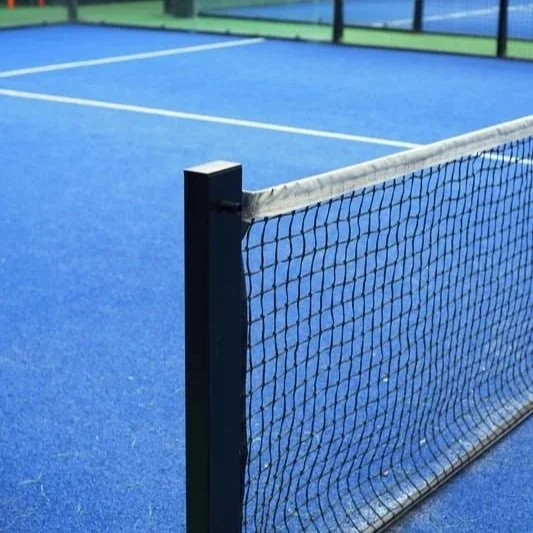
Glass and fencing provide containment, but not the kind that stifles play. Instead, they elevate it.
Balancing Function With Flair
Padel courts are a beautiful contradiction—open-air yet enclosed, intimate yet fast-paced, casual yet architectural. Fencing and glass play a starring role in that paradox. They're not just backdrops for good rallies; they are part of the game itself.
Glass and fencing provide containment, but not the kind that stifles play. Instead, they elevate it. Balls bounce, players pivot, and games unfold in a way that only works when the structure supports it—literally and figuratively. That's why padel court design begins with a conversation about walls and fencing before anything else gets measured or poured.
Why Glass Isn't Just For Looks
Tempered glass panels bring a sleek, modern feel to a padel court, but they're more than eye candy. Regulation courts use ten to twelve millimeter tempered glass because it's impact-resistant and crystal-clear. That clarity gives spectators a full view of the action while letting players anticipate ricochets with a glance.
In padel, the back wall and parts of the side walls are playable surfaces. A perfectly placed lob or defensive return might bounce off the glass before finding its way back over the net. That bounce must be predictable, consistent, and true—which only happens when the glass panels are professionally installed, anchored, and level.
Glass also has acoustic value. Instead of a dull thud from traditional walls, padel players get a satisfying "pop" when the ball makes contact, adding to the court's dynamic rhythm. It's performance-grade sound design, baked into the walls.
Fencing That Works With The Game
While the glass handles the base and back-wall plays, fencing picks up the slack in the upper and outer areas. Welded wire mesh fencing extends upward from the glass and runs along the upper half of the side walls. Its job is containment and safety—without blocking visibility or disrupting rebounds.
Fencing also acts as a gentle buffer between court zones in multi-court facilities. On outdoor padel courts, it keeps balls from soaring into parking lots or someone else's match. On indoor padel courts, it helps define each space while supporting lighting and branding attachments.
Professionally installed fencing resists sagging, rusting, and rattling. Materials are powder-coated and tensioned to avoid any give, and the mesh spacing is chosen to maintain visibility while resisting close-range ball impacts. Not all fencing is created equal, which is why professional-grade components matter here.
Anchoring Structure Without Compromising Movement
Padel court design thrives on symmetry. The fencing and glass have to be rock-solid, but the movement within the court must stay fluid. Anchoring glass and fencing elements requires precision. Uneven footing or haphazard mounts cause vibration, unpredictable rebounds, and even safety hazards.
Experienced builders use steel or aluminum posts anchored into concrete footers or directly into post-tensioned slab surfaces. Reinforcements are added to account for wind loads, especially in outdoor installations. Indoor padel courts benefit from lighter framing but still need sturdy anchoring to support suspended fencing and glass alignment.
Flexibility is baked into the planning stage. Professionals anticipate expansion joints, drainage slopes, and structural limits to build a court that breathes without bending under pressure.
Visibility And Spectator Experience
One of padel's biggest appeals is its intimacy. Players are always close to the action, and spectators get courtside proximity that neither tennis nor pickleball can match. The glass makes that possible without interrupting the game or fencing off the energy.
From a design perspective, glass allows coaches, players, and fans to observe movement, strategy, and technique from every angle. Tournament venues install glass specifically to enhance visibility for cameras and officiating. Residential and club installations benefit just as much from that unobstructed view—it keeps the energy high and the court in focus.
Durability Where It Counts
Outdoor padel courts are constantly exposed to UV rays, moisture, and temperature fluctuations. Fencing and glass must hold up through it all. High-quality glass is tempered and thermally treated to resist thermal shock and surface scratches. Some installations opt for low-iron glass for enhanced clarity and durability.
Fencing, especially when exposed to the elements, needs corrosion resistance. Professional contractors install galvanized and powder-coated mesh that won't peel or rust after one stormy season. The posts themselves are weather-treated, and hardware is selected for strength and longevity, not just convenience.
Cutting corners on materials or installation leads to warping, noise, and eventual breakdown. Replacing fencing and glass mid-season is no one's idea of a good time. Investing in durable elements from the start prevents that mess down the line.
Safety Standards And Smart Design
Safety plays a huge part in fencing and glass design. Glass panels are shatter-resistant and designed to break into small, dull-edged pieces if ever compromised. Most courts never encounter breakage, but it's a built-in safeguard that meets international sport safety codes.
Fencing eliminates pinch points and exposed fasteners, especially at transition zones between glass and wire mesh. Rounded corners and smooth welds protect players mid-play and during rapid movements around the court. Professionals design fencing heights and placements to maximize safety without disrupting game flow or spatial awareness.
Choosing The Right Configuration For The Court
Not all padel courts use the same fencing and glass configuration. Single-court installations may opt for panoramic glass with minimal framing to boost aesthetics. Clubs or tournament venues often use framed systems with modular fencing for easy replacement and uniformity.
Professionals help decide the best layout for each project by factoring in usage volume, spectator space, indoor vs. outdoor location, and surrounding infrastructure. For facilities converting from other court types, it's not always plug-and-play. Glass and fencing must fit within the existing footprint without compromising the padel experience.
Elevating Branding And Court Identity
Fencing and glass aren't just functional—they're opportunities for personality. Custom colors, logo placement, court names, and even sponsor decals turn standard fencing into a visual feature. LED strip lights can be installed along the fence line, and frosted or tinted glass panels can be used to enhance privacy or reduce glare.
From private clubs to urban rooftop courts, branding through fencing and glass turns a basic court into a destination. Professionals help clients choose materials and accents that match the facility's vibe without compromising performance or durability.
Cleaning And Maintenance Support
Glass and fencing do their job quietly, but they need regular attention to stay game-ready. Smudged glass dulls the viewing experience, and dirty fencing makes it look neglected. Professionals recommend regular cleaning with padel-safe products that won't damage coatings or weaken materials.
More importantly, the structural elements need periodic checks. Fasteners can loosen, panels can shift, and mesh can wear under repeated impacts. Routine maintenance from a court builder or sport facility expert keeps the fencing and glass in peak condition—just like the players using the space.
Integrated Lighting And Accessory Mounts
Modern padel court fencing often doubles as a mount for accessories. Lighting poles are sometimes installed into fence posts, and camera mounts, scoreboards, and speaker systems can be attached directly to the mesh or metal framing.
Professionals design these integrations early in the planning phase. The fencing needs to support additional weight without distorting or interfering with play. Electrical runs are concealed, and fixture placement is optimized for balance and visibility. Every bolt and bracket has a purpose—and it's never an afterthought.
Future-Proofing The Court
Padel's growing popularity means facilities may start with one court and later expand. A well-planned fencing and glass system can be designed to accommodate future growth. Modular fencing panels make expansion easier, and anchoring systems can be chosen with additional load requirements in mind.
Professional installers leave room for upgrades, whether that's extra courts, retractable fencing systems, or panoramic glass conversions. Future-proofing through flexible design keeps the investment valuable for years, not just one season.
Fencing And Glass Define The Court
The look, feel, and performance of a padel court all hinge on the fencing and glass. They're not decorative—they're structural, functional, and fundamental. They create the court's boundary, its bounce, its visibility, and its safety. Every shot played, every rally cheered, and every game watched from the sidelines depends on those elements doing their job with style.
Professional design and installation mean those elements don't just work—they thrive under pressure, enhance play, and turn every match into a memorable experience.
CourtMaster Sports, Inc. offers a complete, one-stop solution for professional sports court construction in Southern California and Southern Nevada, including tennis courts, pickleball courts, basketball courts, and bocce courts, and ongoing court maintenance. Our Laykold-certified team services sports court systems with a focus on precision construction, superior playability, and long-term performance. Whether you need new court construction or a fully customized court design, we provide over four decades of industry experience and trusted installation expertise. Design your custom court today and get a high-performance surface built to last.