
Why Do Sport Court Surfaces Fade — and Which Colors Last?
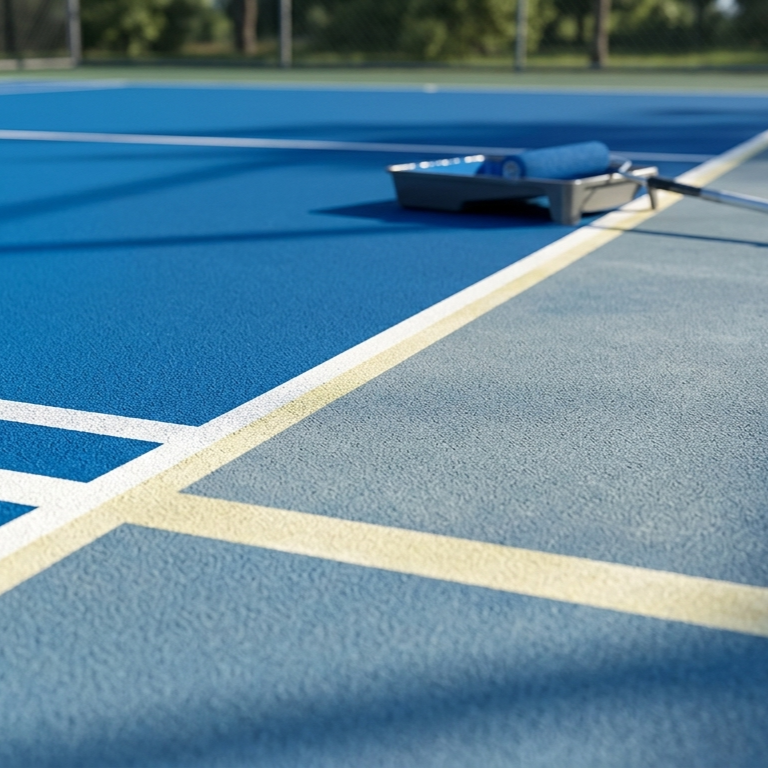
Quick Answer: Sport court surfaces fade because ultraviolet light in sunlight breaks down the pigments in the acrylic color coating over time, washing out the vivid color, and intense heat and use add to the wear. All colors fade under enough UV, but some hold up better than others: in general, lighter and more neutral shades tend to show fading less than very dark or highly saturated colors, which lose their richness more visibly as they break down. The quality of the pigments and coating matters as much as the color itself. In a harsh-sun climate, fading is faster, so choosing quality materials and durable colors and resurfacing on schedule keeps a court looking its best.
A freshly coated sports court is vivid and sharp, but under relentless sun, that color doesn't stay that way forever. Fading is one of the most common cosmetic concerns for outdoor courts, especially in intense-sun climates. Understanding why courts fade — and which colors tend to hold up best — helps you choose a court that stays looking good longer and plan for keeping it that way.
Why Court Surfaces Fade
The fading comes down to ultraviolet (UV) radiation in sunlight. A sports court's color comes from pigments in the acrylic color coating, and UV light gradually breaks down those pigments over time. As the sun works on the surface day after day, the color degrades and washes out, so the bright, saturated court fades to a duller, lighter version of itself. This is the same UV process that fades many materials left outdoors. Intense heat and constant play add to the overall wear of the surface, but UV is the primary driver of the color fading specifically. The more intense and constant the sun, the faster colors fade — which is why courts in high-UV climates lose their vividness sooner than those in milder regions.
All Colors Fade — But Not Equally
It's important to set the expectation that all colors fade under enough UV exposure; no court color is immune to the sun over time. Even so, colors don't all fade equally or show it the same way. In general, very dark and highly saturated colors tend to show fading more visibly, because they have further to fall — a deep, rich color losing its intensity is more noticeable than a lighter, more neutral shade doing the same. Lighter and more neutral tones often hold their appearance better over time, showing less dramatic fading. So while every color will fade eventually, some shades stay looking good longer or hide the fading better than others.
| Color factor | Tendency |
|---|---|
| Very dark/highly saturated | Fading more visible as richness drops |
| Lighter/neutral shades | Often show fading less |
| Pigment and coating quality | Strongly affects fade resistance |
| Sun exposure | More intense = faster fading |
Color Quality Matters as Much as Color Choice
Beyond which color you pick, the quality of the pigments and coating is a major factor in how well the color holds up. High-quality acrylic color coatings made with durable, UV-resistant pigments fade more slowly and retain their color better than lower-quality products, regardless of the shade. So a quality coating in a given color will outlast a cheap coating in the same color. This means fade resistance isn't just about choosing the right color — it's also about choosing quality materials. In a harsh-sun climate, where fading is accelerated, investing in quality coatings pays off in a court that keeps its color longer. The best approach combines a durable color choice with a quality coating.
Why Harsh-Sun Climates Fade Faster
In a climate of intense, all-day sun and extreme heat, sport court colors fade faster than they would elsewhere, because the relentless UV breaks down the pigments more quickly and the heat adds stress. This is normal and expected for outdoor courts in such regions — not a defect, but a consequence of the environment. It does mean that in these climates, color choice and coating quality matter even more, and resurfacing to renew the faded color tends to come due sooner. Setting realistic expectations helps: a court in extreme sun will fade faster and need its color refreshed more often than the same court in a mild climate.
If keeping vivid color matters and your court gets intense sun, talk through both the color choice and the coating quality with your court professional. A durable, UV-resistant coating in a shade that holds up well gives you the best chance of a court that stays looking sharp between resurfacings in a harsh-sun climate.
Renewing Faded Color
Because fading is inevitable under enough sun, the long-term answer is resurfacing, which renews the acrylic color coating and restores the court's vivid appearance. When the color has noticeably faded, resurfacing refreshes it — and it's a routine part of maintaining an outdoor court, coming due sooner in harsh-sun climates. Choosing durable colors and quality coatings slows the fading and extends the time between resurfacings, but periodic renewal is what keeps a court looking its best over the years. A court professional can advise on the colors and coatings that hold up best in intense sun and assess when your court's color is due to be refreshed.
Frequently Asked Questions
Because ultraviolet light in sunlight breaks down the pigments in the acrylic color coating over time, washing out the vivid color to a duller shade. Intense heat and constant play add to the surface wear, but UV is the primary driver of the color fading. The more intense and constant the sun exposure, the faster the colors fade.
All colors fade under enough UV light, but lighter and more neutral shades generally fade less than very dark or highly saturated colors, which lose their richness more visibly. So lighter, neutral tones often hold their appearance longer. Even so, the quality of the pigments and coating matters as much as the shade — a quality coating in any color resists fading better than a cheap one.
They tend to show fading more visibly. A deep, highly saturated color losing its intensity is more noticeable than a lighter, neutral shade doing the same, because the dark color has further to fall in richness. While the underlying UV breakdown affects all colors, dark and saturated shades often reveal fading more dramatically, whereas lighter tones hide it better over time.
Yes, significantly. High-quality acrylic color coatings made with durable, UV-resistant pigments fade more slowly and retain their color better than lower-quality products, regardless of the shade. A quality coating in a given color will outlast a cheap coating in the same color. So fade resistance is about both choosing a durable color and using quality materials, especially in a harsh-sun climate.
Because relentless, all-day UV breaks down the color pigments more quickly, and extreme heat adds stress, so courts in harsh-sun climates fade faster than those in milder regions. It's a normal consequence of the environment rather than a defect. In these climates, durable color choices and quality coatings matter more, and resurfacing to renew the color tends to come due sooner.
Yes, through resurfacing, which renews the acrylic color coating and restores the court's vivid appearance. When the color has noticeably faded, resurfacing refreshes it, and it's a routine part of maintaining an outdoor court. Choosing durable colors and quality coatings slows fading and extends the time between resurfacings, but periodic renewal is what keeps the court looking its best.
Choose Durable Color, Plan to Refresh It
Sport court surfaces fade because UV breaks down their pigments, with heat and use adding wear, and while all colors fade, lighter and neutral shades and quality, UV-resistant coatings hold up best. In a harsh-sun climate, fading is faster, so color choice and coating quality matter even more. Some fading is inevitable, so the smart approach is durable materials plus resurfacing on schedule to keep your court vivid and sharp.
Want a court that keeps its color in the desert sun? — Get guidance on durable colors and quality coatings, or refresh a faded surface. CourtMaster Sports, Inc. serves the Coachella Valley and Las Vegas. Call (760) 548-3535.
