
What Surface Is Best for a Backyard Basketball Court?
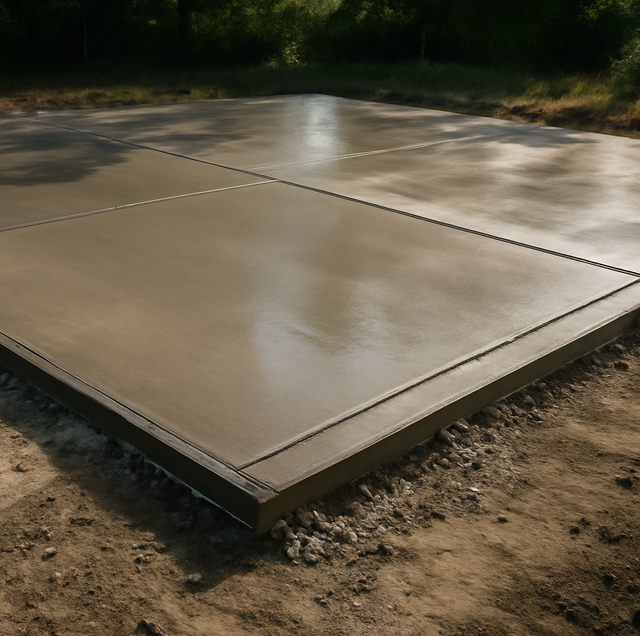
Quick Answer: The best surface depends on what you value most. A poured acrylic coating on concrete gives the truest bounce and a pro look. Cushioned acrylic softens the impact on knees and ankles. Modular tile floats over the slab for lateral give, better traction, and tolerance of minor cracks. But all three ride on one thing: a well-drained, reinforced base, which decides cracking and longevity more than the top coat ever will.
Most people shopping for a backyard court start at the top, comparing colors and coatings and the feel of the ball off the floor. That is the wrong end to start from. The surface you play on is real, and it matters, but the layer that decides if your court lasts fifteen years or spiderwebs with cracks in three is the one nobody sees. Get the base right first, then choose the surface that fits how your family actually plays.
The Base Comes First, Always
Every backyard court is really two projects stacked on top of each other. Underneath is a structural base, usually a poured concrete slab or, sometimes, asphalt. On top of that base sits the playing surface, whether that is a poured acrylic coating or interlocking tiles. The base is the part that carries the weight, resists the ground moving beneath it, and either holds flat for decades or telegraphs every settlement and temperature swing straight up through your surface as a crack.
A proper court slab is more than a patio pour. It wants a compacted, well-drained sub-base so water does not collect and heave the concrete, and it wants reinforcement, typically rebar or welded wire mesh, so the slab acts as one connected sheet instead of loose panels that drift apart. Control joints are cut in deliberately so that when concrete shrinks as it cures, and it always shrinks, the cracking happens along a planned line instead of wandering across your key. Concrete generally runs firmer and cracks less than asphalt over the long haul, while asphalt is cheaper to place and a little more forgiving during installation, but is more prone to structural cracking and softening as it ages.
This is why the base decides more than the coating. A flawless acrylic system poured over a weak, poorly drained slab will crack the moment the slab does, because the thin acrylic skin has no choice but to follow the concrete underneath it. Intense sun and wide day-to-night temperature swings make this worse, driving the constant expansion and contraction that pries at any weakness in the base. A crack-resistant slab is not the glamorous part of the project, but it is the part that protects everything you spend above it.
Poured Acrylic: The Truest Bounce
Acrylic hard court is the surface most people picture when they think of a real basketball court. It is the same family of system you see on outdoor tennis courts: several coats of textured acrylic troweled and squeegeed directly onto the concrete or asphalt. A resurfacer coat fills and smooths the base, color coats carry the pigment, and fine silica sand is blended into those coats so the finish grips your shoes instead of turning slick. The lines are painted on top, and the whole thing cures into one continuous, unbroken sheet of color.
The reason players and builders love it comes down to the bounce. Because the acrylic is bonded tightly to a rigid base with nothing loose underneath, the ball comes off the floor true and predictable every time, and your dribble behaves the same in the paint as it does at the arc. You also get a fully custom look: any color combination you want, crisp painted lines, and a clean pro finish with no seams anywhere. The catch is that this surface demands a good, crack-free slab, because it will faithfully copy any flaw beneath it. It is also the firmest of the options, so every stop and landing goes straight into your joints with nothing to soften it.
Cushioned Acrylic: A Little Give for the Knees
Cushioned acrylic keeps that same painted acrylic finish on top but inserts resilient layers between the base and the color coats, usually acrylic binders blended with rubber granules built up in multiple passes. The color and line coats on the surface are identical to a standard hard court, so you keep the smooth, unbroken look and the true, predictable bounce. What changes is underneath.
When you land or push off, those rubber-filled layers compress slightly and give some of that energy back instead of firing all of it up your leg. Think of it as the difference between running on a bare sidewalk and running on a rubberized track: the track still feels solid and lets you move fast, but your knees know the difference an hour in. For a household with a serious player, an aging set of knees, or long weekend sessions, that cushion softens the pounding without muddying how the ball plays. Manufacturers describe these systems in terms of shock absorption; the real-world feel is subtle but noticeable, a court that plays true yet does not punish you for staying out an extra hour.
Modular Tile: Give, Traction, and Crack Tolerance
Modular tile is a different animal entirely. Instead of a poured coating, these are rigid polypropylene tiles, usually around a foot square, that snap together with interlocking tabs and lay loose over the concrete. The court floats on top of the slab rather than bonding to it, and that single fact drives most of its advantages.
Because each tile has a slightly flexing surface and an open grid structure underneath, it delivers real lateral give when you plant and cut, along with strong traction that helps guard against slipping. The open underside lets water drain straight through and off the slab, so the court sheds rain fast and dries quickly. Floating over the base also means minor cracks in the slab stay hidden and harmless: the tiles simply bridge over a small crack instead of splitting along it the way a bonded coating would. Tile is forgiving on joints, drains well, and is friendly to a homeowner who wants a court over a slab that is not perfect. The tradeoffs are honest ones. The bounce is slightly muted compared with poured acrylic, since the ball meets a flexing tile rather than a rigid bonded sheet, and up close, you see a grid of seams rather than one unbroken color. It is also the most DIY-friendly of the three, which cuts both ways depending on how you feel about doing the work yourself.
Surface Comparison at a Glance
| Factor | Poured Acrylic | Cushioned Acrylic | Modular Tile |
|---|---|---|---|
| Bounce trueness | Truest, most predictable | True, same as hard court | Slightly muted |
| Joint comfort | Firmest, hardest on joints | Some give, easier on knees | Lateral give, forgiving |
| Traction | Sand-textured grip | Sand-textured grip | Strong, grippy tile |
| Heat underfoot | Hot, worse in dark colors | Hot, worse in dark colors | Runs cooler, drains |
| Crack tolerance | Low; needs a crack-free slab | Low; needs a sound slab | High; floats over minor cracks |
Heat, Color, and Which Way the Court Faces
Surface temperature is a real design decision for a home court, not an afterthought. A poured acrylic finish in a dark color absorbs sun and can get truly hot underfoot on a bright afternoon, hot enough to matter for kids playing barefoot or a dog crossing the court. You have three levers to pull. First, color: lighter surface colors reflect more sun and run cooler than deep blues and greens, so leaning lighter on the main playing area keeps the floor more comfortable. Second, surface type: many modular tiles run cooler than dark poured acrylic because their open structure lets air move and lets heat shed rather than soaking it into a solid sheet. Third, orientation: aligning the court so play runs north-south keeps the sun off to the side rather than in a shooter's eyes at the low-angle hours, which cuts glare and, paired with evening play, sidesteps the hottest part of the day. Intense UV also fades color over time, regardless of surface, which is why the finish and the slab beneath it both need to be built for the sun rather than treated as an afterthought.
Sizing the Court and Doing Two Sports at Once
You do not need a regulation footprint to get a great court. Home courts commonly come in three flavors: a full court for the household that wants the real thing, a half court that fits most backyards and covers the vast majority of driveway-style play, and a key-only setup for shooting, free throws, and one-on-one in a tight space. Whatever size you pick, plan for a run-off room around the lines so a fast break does not end in the fence and confirm the actual dimensions against your yard before anyone pours concrete or orders tile.
One court can also do more than basketball. Because the surface and its lines are chosen at build time, a court can be striped for basketball and pickleball together, using different line colors so the two sets read clearly without confusing each other. That multi-sport option works across all three surfaces, though poured and cushioned acrylic gives you the crispest painted lines, while tile achieves the same with differently colored tiles laid into the pattern. If more than one sport is even a maybe, decide before the surface goes down, because retrofitting lines later is far more work than planning them in from the start.
Frequently Asked Questions
They soften the impact in different ways. Cushioned acrylic uses rubber-filled layers beneath the coating to absorb vertical impact when you land, which is the load that stresses knees on jump shots and rebounds. Modular tile flexes laterally and gives when you plant and cut, which reduces the twisting side load on ankles and knees more than a rigid poured surface does. If your main concern is landing impact, cushioned acrylic targets it directly; if it is cutting and pivoting, tile's lateral give helps most.
The slab, by a wide margin. A poured acrylic coating is only a fraction of an inch thick and is bonded directly to the base, so it has no independent strength; when the concrete beneath it moves or cracks, the coating cracks right along with it. That is why a compacted, well-drained sub-base, proper reinforcement, and deliberately cut control joints matter more to a court's lifespan than any product you put on top. Modular tile is the exception, since it floats over the slab and can bridge small cracks that develop in the base.
Backyard court tile is usually a molded polypropylene square, a bit over half an inch thick, sitting on a grid of small feet that lift it off the slab. That raised structure is doing real work: it lets water drain beneath the tile and allows air to move beneath the surface, which is part of why tile runs cooler and dries faster than a solid coating. The tiles lock to each other with interlocking loops or pegs along their edges, and a careful installer leaves a small expansion allowance around the perimeter so the field can grow and shrink with temperature without buckling. They still want a flat, sound slab underneath, since tile follows the plane of whatever it sits on.
Sometimes, and tile is what makes it possible. The old slab has to be reasonably flat, structurally sound, and draining away from the play area; a surface that ponds water or has heaved sections is a poor host. If those boxes are checked, modular tile is the friendliest option for an existing slab because it floats on top and bridges over minor, stable cracks that would ruin a bonded acrylic coating. A poured acrylic system, by contrast, needs the old slab to be nearly crack-free, since it will copy every flaw underneath it.
A regulation half-court is 50 feet wide by 47 feet deep, half of a full 94-by-50 floor, but most backyards scale that down, and a popular home half-court runs closer to 30 by 50 or smaller while still fitting a three-point arc and a key. A key-only or free-throw setup can drop to roughly 20 by 25 for shooting and one-on-one. Whatever size you pick, add a few feet of clear run-off beyond every painted line, ideally three to five, so a player chasing a loose ball is not headed into a fence, and leave room for the pole and backboard overhang past the baseline. Measure your usable yard against those numbers before committing, since the run-off is the part people forget.
A poured acrylic system is a wear layer, so it needs a fresh color coat every several years as the top acrylic thins from sun and play, plus regular sweeping and an occasional rinse to keep grit from sanding it down; the concrete base under it can last decades if it was built and drained right. Cushioned acrylic follows the same recoat rhythm, with the rubber layer beneath staying put. Modular tile requires the least ongoing coating work, since there is nothing to recolor, though a damaged tile gets unclipped and swapped, and the field benefits from an occasional wash to clear the joints. In every case, the base outlives the surface, which is the argument for spending on the slab first.
Book a free on-site consultation — get a court sized, surfaced, and built for how your family actually plays. CourtMaster Sports, Inc. serves the Coachella Valley and Las Vegas. Call (760) 548-3535.
