
Avoid These Common Layout Mistakes in Backyard Courts
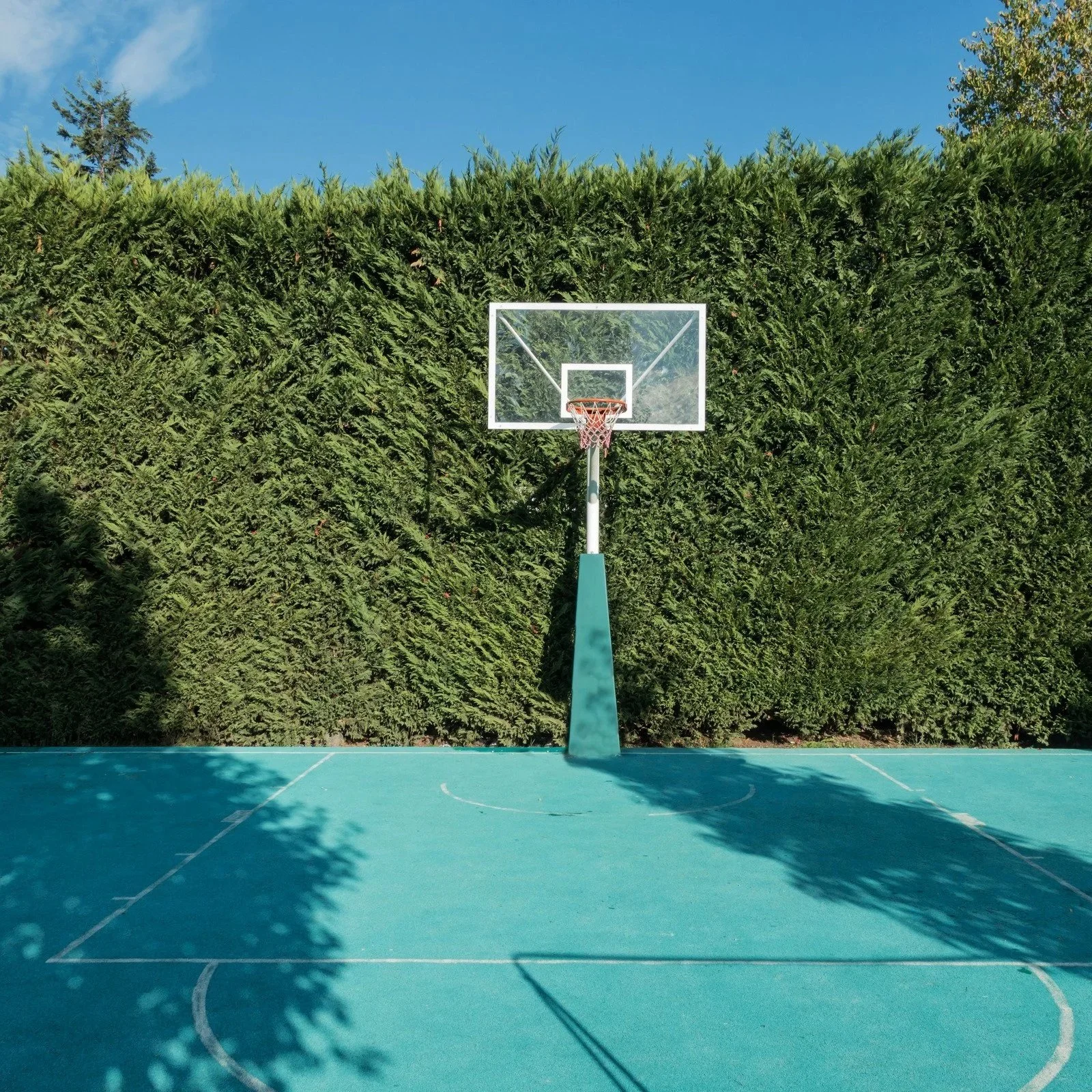
Without proper spacing, a beautifully surfaced court ends up feeling boxed in.
Building Too Close To Property Lines
A tight squeeze might seem harmless during the dreaming phase, but backyard court construction demands breathing room. Without proper spacing, a beautifully surfaced court ends up feeling boxed in. Fences scrape shrubs, nets flirt with tree limbs, and lighting becomes more neighbor-facing than player-friendly.
Professionals always account for setback requirements and access zones. That buffer makes future maintenance easier and keeps the structure compliant with local zoning laws. Cramming a court into an undersized footprint often means redoing landscaping, cutting trees, or worse—getting hit with a code violation. And no one enjoys explaining a padel glass wall to the HOA.
Ignoring Sun Orientation
A backyard court can look flawless at noon and feel completely unplayable at four PM. Sun orientation is one of those details that amateur layouts frequently skip. Courts laid out east-west create brutal glare during sunrise and sunset—right when people actually want to play.
Professional installers align courts north-south whenever possible. It minimizes direct sun in players’ eyes and maximizes usability throughout the day. And when the lot shape forces a compromise, pros offer clever workarounds—such as shaded fencing, offset lighting, and glare-dampening surface colors that reduce reflective heat.
Courts aren’t just places to play—they’re meant to be enjoyed. Blinding sunlight in your backhand zone doesn’t exactly spark a love of the game.
Skipping Drainage Considerations
Surface drainage isn’t just a technicality—it’s a survival tactic. Poor layout decisions often leave backyard courts in a state of perpetual puddling, especially after heavy rain. Without slope planning, water collects in the center, around net posts, or along fence lines, softening the base and staining the surface.
Professionals incorporate slope into both the court slab and the surrounding terrain. Water flows efficiently off the court, and custom drains carry it away from the playing zone. That protects the surfacing system and prevents moss, algae, and surface bubbling from appearing uninvited.
A court that doesn’t dry out quickly gets used less. And if standing water freezes overnight, say goodbye to a smooth finish and hello to expansion cracks.
Overlooking Utility Access
Lights need power. Irrigation lines may need rerouting. Ball containment nets might benefit from retractable poles. Utility access plays a significant role in determining the functionality of a backyard court after the final surfacing coat has dried.
Professionals plan everything in advance. They flag underground utilities before digging, route conduit lines to avoid trenching later, and include service access panels where maintenance is likely to happen. They also prep lighting systems with the right voltage and controller placements—no rewiring, no last-minute electrician calls.
Ignoring utilities during the layout phase leads to expensive rework. And no one wants to be the homeowner who has to saw through their brand-new court slab to add a single light post.
Placing Fencing Too Close To The Play Area
When fencing is installed too close to the sidelines, the court becomes claustrophobic. Players hesitate during lateral movement, and the fence starts taking more hits than the paddle. That speeds up wear, warps panels, and shortens the lifespan of your containment system.
Professionals provide ample buffer between the playing surface and fencing—especially in padel, where the glass enclosure is part of the strategy. Pickleball players appreciate extra chase room, and in multi-use layouts, those few extra feet keep the play flowing naturally.
Cramped fencing may save space on paper, but it limits the experience. A well-sized court feels open, inviting, and built for movement. That’s what keeps people playing longer.
Using The Wrong Surface For The Space
Every backyard has its unique quirks—such as shade, moisture, traffic, or climate extremes. And those quirks significantly impact surfacing needs. Too often, DIY layouts default to standard concrete or budget acrylic without thinking about what the court will actually deal with season after season.
Professionals evaluate environmental factors before picking a surface system. If roots are nearby, they opt for flexible layering. If a lot receives afternoon sun, heat-reflective coatings and UV-stable pigments are incorporated into the mix. Some courts benefit from cushioned underlayers for comfort; others thrive with modular tiles that flex with temperature shifts.
Using the wrong surface doesn’t just impact play—it creates costly maintenance cycles. Courts fade, crack, or become slick if they’re not matched to their surroundings.
Neglecting Wind Exposure
Nothing kills a rally like a gusty crosswind. Backyard courts without wind mitigation feel like nature’s ping-pong table. Poor layout placement—especially in open lots—leads to balls sailing, lobs flopping, and strategy going out the window.
Professionals read the land before breaking ground. Trees, buildings, fences, and lot orientation help block or channel wind. Where exposure is unavoidable, mesh windscreens or strategic adjustments to the height of fencing keep air movement manageable.
Wind matters even more for padel, where ball trajectory and wall rebounds depend on consistent conditions. A good layout doesn’t just consider where the court fits—it thinks about how it plays.
Underestimating Lighting Needs
A few floodlights nailed to a nearby pole won’t cut it. Backyard courts need proper illumination to be playable after sunset. Unfortunately, many layouts skip this detail until the court is finished—and then it’s too late to add wiring without trenching.
Professionals lay out lighting plans with spacing, height, and beam angles in mind. Courts shine evenly from corner to corner, with minimal shadows and no blind spots. LED systems reduce energy costs, and low-profile fixtures minimize neighbor complaints and glare.
A great court shouldn’t fade into darkness the moment the sun dips. Proper lighting extends play hours, boosts ROI, and makes your backyard feel like a pro-level venue.
Forgetting About Spectator Space
Whether it’s a friendly doubles match or a tournament with bragging rights on the line, people love to watch. A court that lacks seating zones or safe viewing areas feels incomplete. And folding chairs perched on mulch rarely make anyone feel like sticking around.
Professional layouts often incorporate space for benches, umbrellas, shaded structures, or even a built-in viewing deck, provided the elevation allows. Those details make the court feel welcoming and keep friends and family engaged—even if they’re not holding a paddle.
Spectator space isn’t just for comfort. It adds value to the property, complements the design, and supports the social use of the court for years to come.
Ignoring Expansion Potential
Backyard courts are addictive. Once one sport moves in, others often follow. But without space to expand, that growth becomes a logistical headache. Many amateur layouts leave no room for future additions, such as basketball hoops, rebound walls, or additional play zones.
Professionals think two steps ahead. They position courts to allow space for new surfacing, accessory pads, or even a second court. They also pre-wire for future lights, plan conduit routes, and design fencing in segments so future adjustments don’t involve tearing everything apart.
Courts should evolve with the players. Planning for growth means the initial investment delivers value well into the future.
Trying To Do It All On One Slab
Combo courts sound like a great idea—pickleball in the morning, volleyball after lunch, basketball before dinner. But trying to pack every sport into one court without planning creates layout chaos. Too many lines, not enough space, and a playing experience that feels cluttered and confusing.
Professionals design combo courts with layering in mind. Court lines are color-coded, sport spacing is preserved, and accessory equipment is mounted cleanly to minimize obstruction. If needed, they recommend dual-slab systems with shared access paths to maintain distinctiveness for each sport.
The goal isn’t to cram—it’s to optimize. With the right planning, a single backyard space can support multiple sports without compromising play quality for any of them.
A Good Layout Is a Long-Term Gift
When courts are laid out with intention, they become more than backyard features. They become favorite hangouts, fitness zones, and memory-makers. Professional construction, surfacing & design trends all lead to one big takeaway—thoughtful layout makes the difference between an underused slab and a beloved sports oasis.
The best backyard courts start with one big question: how will it feel to play here every week for the next ten years? Professionals know how to answer that question with space, surfacing, and design that’s built to last and easy to love. Avoiding layout mistakes isn’t just about now—it’s about all the great matches still to come.
CourtMaster Sports, Inc. offers a complete, one-stop solution for professional new court construction in Southern California and Southern Nevada, including pickleball courts, tennis courts, bocce courts, and basketball courts, and ongoing project management. Our licensed team services residential, commercial, and municipal court systems with a focus on quality construction, efficient coordination, and long-term performance. Whether you need a new residential court or a full-scale municipal installation, we provide active California and Nevada licenses and proven industry expertise. Start your court construction project today and get a professionally built surface you can trust.