
Do Dark Court Colors Get Too Hot to Play On?
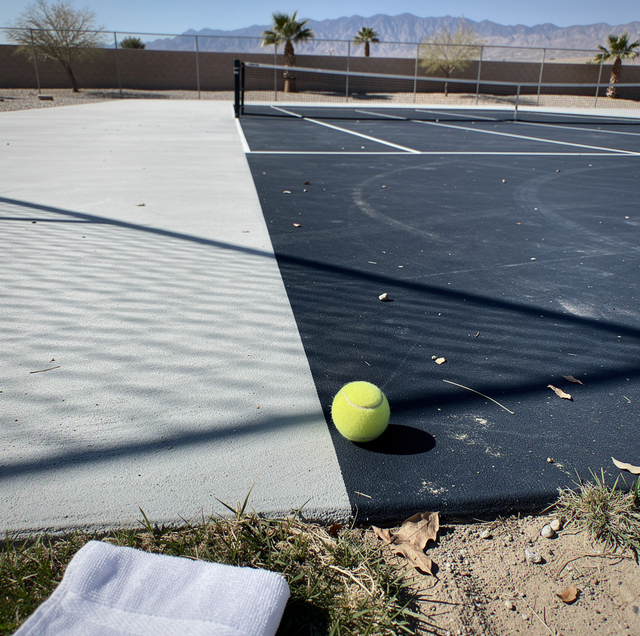
Step onto a dark green or navy court surface in thin-soled shoes around one in the afternoon and you will feel it before you consciously register it: a wave of heat pressing up through the sole, sharper than the air around you, almost like standing on a stovetop that was switched off ten minutes ago. Bare feet on the same surface tell an even blunter story. A player who tries it usually lasts three or four seconds before hopping back onto grass or a towel. Walk twenty feet over to a pale gray or sand-colored section of the same court and the difference is immediate. The surface still feels warm, but not punishing. Drop a ball on each spot, and you'll notice the bounce feels different too. Off the hot dark patch, the ball seems to come off quicker and lower, almost skidding. Off the lighter surface, the bounce feels a touch softer and more predictable. None of this is imagination or placebo. It's basic physics playing out under your feet.
Why Dark Colors Absorb More Heat
Sunlight arrives as a mix of visible light and shorter and longer wavelengths the eye can't see. What a surface color actually represents is which wavelengths of visible light it reflects at you and which it soaks up. A dark surface looks dark because it absorbs most of the visible spectrum rather than reflecting it. That absorbed energy doesn't vanish. It converts into heat in the surface material itself, which is why a dark court can run well above the surrounding air temperature on a bright day while a light one stays closer to it.
Think of it the way you'd think about a black t-shirt versus a white one on a sunny afternoon. Both shirts sit in the same sun, breathe the same air, and cost the same to wash, but the black one heats up noticeably faster because it absorbs more of the incoming light energy rather than reflecting it. A court surface behaves the same way, just at a larger scale and over many more hours of direct exposure. Acrylic color coating is a thin, pigmented layer at the surface, which means its color has an outsized effect on how much of that solar energy is converted to heat versus reflected.
Texture matters too, though less than color. A slightly rougher, more granular surface has more exposed surface area to the sun than a perfectly smooth one, which can slightly increase how much heat it absorbs and retains. But color is the dominant factor by a wide margin. Two courts built with identical sub-base, drainage, and acrylic system will still run at noticeably different surface temperatures if one is finished dark and the other light.
What The Heat Difference Actually Feels Like In Play
The underfoot sensation is the obvious part, but the effect on ball behavior is what actually changes how a match plays. A hotter surface transfers more energy into the ball on contact, and warm rubber compresses and rebounds differently than cool rubber. Players who spend serious hours on both light and dark courts in the same season often describe the hot dark surface as playing "quicker" and lower off the bounce, while a cooler light surface plays a bit higher and more true to what the ball would do in a climate-controlled gym. Neither is wrong or broken. It's just a different set of physical conditions, and it's worth knowing which one you're stepping onto before a match starts, especially in shoes with thin soles or on a first point after a long baseline rally where sustained ground contact time goes up.
There's a practical safety layer here too, separate from performance. Surface temperatures on a dark court at midday in strong sun can climb well past what feels comfortable for bare skin, which matters for anyone playing barefoot on a bocce court, coaching kids who sit down courtside, or handling equipment left directly on the surface. It's rarely as dangerous as pavement burns, but it's uncomfortable enough that most regular players adjust their footwear or playing hours after feeling it.
Temperature Swings Stress Every Coating, Not Just Dark Ones
Heat absorption during the day is only half the story. In climates with big swings between daytime highs and overnight lows, the surface expands as it heats and contracts as it cools, cycling through that stretch-and-squeeze day after day, season after season. That expansion and contraction puts mechanical stress on the acrylic coating and on any hairline cracks or seams underneath it, regardless of the court's color. A dark court experiences a wider temperature range across a single day because it heats up more in the sun and then gives that heat back off faster after dark, so the swing itself tends to be more pronounced even though both light and dark coatings face the same underlying stress from expansion and contraction.
This is part of why so many players shift toward evening and after-dark sessions once summer temperatures set in. Playing after sundown means the surface has had hours to shed the heat it absorbed during the day, and the air itself is more comfortable, too. That shift in when people want to play is also the reason LED court lighting has become such a common add-on for courts that see heavy use in warmer months. It's a separate project from color coating, but the two are connected in a practical sense: a court engineered to stay playable after dark needs both a surface that's built to withstand the day's heat and lighting good enough to see the ball by.
How Heat-Rated Acrylic Coatings Change The Equation
A standard acrylic color coating and a heat-rated one can look nearly identical on the day they're applied, but they're formulated differently underneath the surface. Heat-rated systems typically use resins and pigments engineered to resist UV breakdown for longer, which matters because UV exposure is what causes color to chalk and fade over time, and a faded, chalky surface behaves less predictably than a fresh one. Some heat-rated formulations also rely on reflective pigment technology that reflects more of the infrared portion of sunlight, even within a given color family, so two courts that look like a similar shade of green side by side can still run at different surface temperatures depending on which coating is underneath that color.
None of this means color choice stops mattering once a heat-rated coating goes down. Physics doesn't change because of what's mixed into the paint. A heat-rated dark court will still run hotter than a heat-rated light one under the same sun. What changes is how well that coating withstands the cycle of heat, cooling, and UV exposure without breaking down early, fading unevenly, or losing its grip on the underlying surface. That resistance to breakdown is the entire value of choosing a heat-rated system over a standard one, especially for anything finished in a darker palette or built in a location that sees long, intense stretches of direct sun.
Choosing A Color That Balances Look And Heat
Most players and facility owners land somewhere in the middle rather than at either extreme. A common approach is to pick a lighter shade for the areas that see the most direct barefoot or thin-soled contact and heaviest use, and reserve darker accent colors for logos, borders, or contrast lines where the heat effect matters less because nobody's standing there for long stretches. Traditional tennis and pickleball courts often use a mid-tone green or blue for playing surfaces, specifically because those tones balance ball visibility in sunlight and heat retention reasonably well, without swinging to either the coolest possible pale finish or the hottest possible deep tone.
Texture selection is part of the same conversation. A coating built for a bit more grip and a slightly slower ball speed will also expose slightly more surface area to direct sun, and while that's a secondary effect next to color, it's worth weighing together rather than choosing texture and color as two completely separate decisions.
When Fade And Heat Signal It's Time To Recoat
A color coat that's chalking, losing its saturation, or showing blotchy patches where the color looks uneven from one section to the next is telling you it's lost some of its UV resistance, and a surface in that condition will often run hotter and less predictably than a fresh coating in the same color. That's a different situation from birdbath puddling or hairline cracking, which point to sub-base or drainage issues rather than a surface coating problem, but all three are worth a look together during a resurfacing evaluation, since a crew assessing crack repair or puddling on an aging court can check coating condition at the same time. Certified Laykold installers and other acrylic specialists can tell fairly quickly, by feel and appearance, whether a court's existing coating is still doing its job or the color and heat performance have started to slip, which is usually the point at which resurfacing is the better call than waiting another season.
Frequently Asked Questions
Yes, and it's a separate consideration from heat entirely. A ball that's easy to track against a mid-tone or contrasting background can be harder to pick out against a surface color too close to the ball's own color, which is one more reason most playing surfaces land in the green or blue family rather than at the very dark or very light ends of the spectrum.
A court that's just been rained on cools down temporarily because evaporating moisture pulls heat out of the surface, but that effect disappears once the surface fully dries out, usually within an hour or two of direct sun, and the color-driven heat pattern picks right back up as if the rain hadn't happened.
Yes. A concrete sub-base holds and releases heat differently than the coating layer sitting on top of it, so a thicker or denser base can act like added thermal mass, keeping the surface a bit warmer into the evening even after the color coating itself starts cooling.
A multi-sport surface striped for several games at once often uses more than one color across the same court, which means different zones of a single court can run at noticeably different temperatures depending on which lines and areas are darker, something a single-color tennis or pickleball court doesn't have to deal with.
Windscreens and fencing are built mainly to block wind and errant balls, but any panel that also casts shade across part of a court will measurably lower the surface temperature in that shaded strip compared to the sun-exposed sections nearby, even without changing the coating itself.
Heat-rated formulations use different resin and pigment packages than standard acrylic, which is a material and manufacturing difference rather than a marketing label, so it's a genuine product distinction worth asking about by name during a resurfacing consultation rather than assuming all acrylic color coatings are interchangeable.
Schedule a color and coating consultation — find a heat-rated acrylic finish that matches your court's sun exposure and play style. CourtMaster Sports, Inc. serves the Coachella Valley and Las Vegas. Call (760) 548-3535.
