
What Makes a Slip-Resistant Court Surface Hold Grip
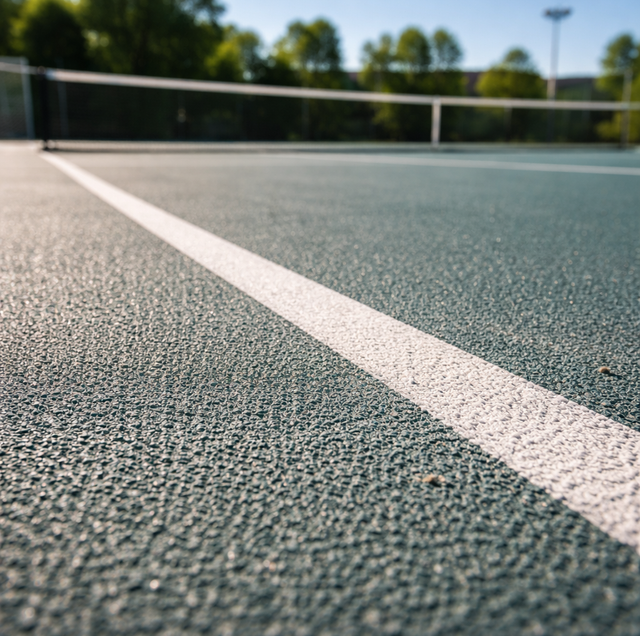
Quick Answer: Traction on a hard court comes from the fine silica sand mixed into the acrylic color coat. Those sand grains create a micro-texture that grips a shoe and gives water somewhere to sit below the contact points instead of forming a slick film under the sole. Grip also depends on the court shedding water quickly, which is why a slight planar slope and clean drainage matter as much as the sand. When the texture wears smooth or a dirt-and-algae film builds up, the surface turns slippery, and resurfacing is what restores the grip.
A court can look perfectly dry and still send a player's foot out from under them, or feel sure-footed through a light rain. The difference is not luck. It comes down to how the surface is built and how well it moves water away from the point where a shoe meets the ground. Grip is engineered into the coating, and it slowly fades with use, so knowing what creates it tells you a lot about why one court feels safe, and another feels sketchy.
The Texture Is In The Sand
A hard court's playing surface is not bare asphalt or concrete. It is a stack of acrylic coatings rolled or squeegeed on top of the base, and the layer that does the gripping is the pigmented color coat. Mixed into that acrylic is a measured amount of fine silica sand. When the coat cures, each grain sits partly proud of the surface, so the finish is not glass-smooth but covered in thousands of tiny high points per square inch.
That micro-texture is what a shoe sole actually grips. The raised grains bite into the rubber and give it something to catch on, the way fine grit on a stair tread keeps a foot from sliding. Just as important, the valleys between the grains give water a place to go. Under a wet sole, water gets pushed down into those low points instead of spreading into a continuous slick film that floats the shoe. A truly smooth coating has nowhere to send that water, so it stays trapped between rubber and acrylic and the foot hydroplanes.
Why sand grade and loading matter: Not all sand textures behave the same. Two things set the feel: how coarse the grains are, and how much sand is loaded into the coat. Coarser grains and a heavier sand load give a more aggressive, grippier surface. Finer grains and a lighter load give a faster, smoother-playing court with less bite.
That is a genuine tradeoff, not a free upgrade. A heavily sanded, coarse surface grips well and drains well, but it also chews through shoe soles faster, wears tennis and pickleball balls quicker, and holds dirt more stubbornly, which makes cleaning harder. A lighter, finer texture is kinder to shoes and balls and easier to keep clean, but it offers less traction and can get slick sooner as it wears. A good installer tunes the grade and ratio to how the court is used, leaning grippier for a facility that sees wet mornings and heavy play, smoother for a fast competitive surface kept under cover.
Getting Water Off The Court
Texture handles the water right under the shoe, but it can only do so much. The other half of slip resistance is getting standing water off the surface entirely, and that is a job for shape and drainage rather than coating.
A properly built court is not dead flat. It is laid to a slight, even planar slope, commonly around one percent as a general industry norm, tilted in a single plane from one side to the other. That gentle pitch is enough to let gravity walk water across the surface and off the low edge instead of letting it pool. The slope is planar rather than crowned so the ball bounces true, yet still steep enough to move water. Around and beyond the court, perimeter drainage carries that runoff away so it does not wash back onto the playing area.
When slope and drainage are working, a court sheds a rain shower or a hose-down in minutes and dries evenly. When they are not, water collects in low spots. Those puddles are where the trouble is, because no amount of surface texture makes a standing puddle safe to plant a foot in. Ponding is also a sign that the base has settled or the surface has worn unevenly, both of which are worth having looked at.
Why A Clean Court Grips Better
Even a well-built, well-textured court gets slippery if it is dirty, and the reason ties straight back to the sand. Dust, pollen, leaf litter, and the greenish algae or mildew film that grows in shaded or damp spots all settle into the valleys between the grains and skim over the high points. Fill in that micro-texture, and you have effectively laid a smooth, slick layer over the grip the court was built with.
Algae and organic film are the worst offenders because they are slick even when only slightly damp, whether the moisture comes from rain, morning dew, or a recent cleaning. A shaded corner that never fully dries can grow a film you can barely see but can definitely feel underfoot. This is why a court that gets frequent rain or stays damp, or one shaded under trees, needs cleaning more often than its texture alone would suggest. Sun and heat cut the other way, drying the surface and slowing film growth, but they bring their own wear by baking and eroding the texture over years of exposure.
Cleaning without wrecking the coating: Regular cleaning is the cheapest traction insurance there is, but technique matters. Sweep or blow off debris often, and rinse the surface to clear dust from the texture. For algae and stubborn film, a gentle wash with a mild cleaner and a soft brush lifts the growth without tearing at the acrylic.
If a pressure washer is used, keep it at low pressure with a wide fan tip held well back from the surface, and keep the wand moving. A narrow, high-pressure jet held close will strip the color coat, blast the sand out of the acrylic, and leave bare, smooth, even slicker patches behind, which is the opposite of the goal. Harsh solvents and stiff wire brushes do the same kind of damage. The aim is to clear what is sitting on top of the texture, not to scour the texture off.
If you use a pressure washer on the court, keep it at low pressure with a wide fan tip held well back from the surface, and keep the wand moving. A narrow, high-pressure jet held close strips the color coat and blasts the sand out of the acrylic, leaving bare, slick patches that defeat the whole point.
When Traction Wears Out
Grip is not permanent. Every game, every shoe scuff, every dragged chair, and every season of sun and rain sands down those raised silica grains a little more. Over years, the high points flatten, the valleys fill and shallow out, and the surface that started with real bite ends up polished and slick, especially along the baselines and service areas where feet work hardest.
You can often see it before you feel it: a worn court looks shinier and more uniform in the high-traffic lanes, while the edges still show texture. Faded color is a related clue, since the same wear and UV exposure that dulls the pigment is flattening the grip. Once a surface has polished out, cleaning will not bring the traction back, because the texture itself is gone.
Resurfacing is the fix. New acrylic color coats, carrying a fresh charge of silica sand, are applied over a cleaned and repaired surface, rebuilding the micro-texture from scratch and restoring the grip the court had when it was new. It is also the moment to correct any drainage or low-spot problems that were letting water pool, so the renewed surface stays safe longer. How often a court needs it depends on use and exposure, with heavily played and sun-exposed courts wearing faster than lightly used or covered ones.
Playing Safely On A Damp Court
Do not play on a court that has standing water on it. A visible puddle or a sheet of water means the surface texture is overwhelmed, so a hard plant or a quick change of direction can slide out with no warning, and a fall on a hard court causes real injuries. Wait until the water has drained and the court has dried, or squeegee off the puddles and give it time.
A court that is merely damp, from dew, drizzle, or a recent rinse, sits in a gray zone. A textured, clean surface can be playable when just damp, but grip is still reduced, so ease off aggressive sprints and cuts until it dries fully. Wipe down shoe soles, since a slick sole undoes even a grippy court. And treat shaded, slow-drying corners with extra caution, because that is where an invisible film is most likely hiding. When in doubt, give the surface the time it needs.
Frequently Asked Questions
Color itself does not change traction, but it changes how fast a court dries, which affects grip indirectly. Darker surfaces such as green or blue absorb more heat and warm up faster in the sun, so they tend to drive off dew and light moisture sooner than a lighter surface at the same spot. Even so, a dark court in constant shade holds dampness as long as any other, so the drying benefit only shows up where the surface actually gets sun.
Yes, in some cases a texture coat or a grip-additive top layer can be applied over a sound but slightly polished surface to bring back bite without stripping everything down. It is a lighter treatment than a full color-coat resurfacing and works only when the underlying coating is still well bonded and crack-free. If the surface is peeling, blistering, or cracked, a top-up will fail, and a proper resurfacing is the honest answer.
Cushioned court systems add rubber layers beneath the acrylic to soften impact, but the grip still comes from the same sand-filled color coat on top, so the traction mechanism is identical. The difference players notice is that a cushioned surface flexes slightly underfoot, which can change how a slide feels but not how much the top layer grips. Both systems rely on the same texture, drainage, and cleaning to stay slip-resistant.
Indoor hard courts still use a sand-textured acrylic finish, because grip is about the shoe-to-surface bite, not just rain. Indoor courts get damp from condensation, humidity swings, and mopping, and a smooth indoor coating is dangerously slick when any moisture reaches it. The main difference is that indoor courts skip the drainage slope, since there is no weather to shed, and instead lean on climate control and prompt drying.
Court-specific shoes with a herringbone or similar tread pattern channel moisture out from under the sole, much like the court texture does from its side, and the two working together give the best grip. Worn-smooth soles are a common hidden cause of slipping, because a bald shoe defeats even a well-textured, clean court. Wiping soles clean before stepping on and swapping out shoes once the tread flattens does more for footing than most players expect.
Run a hand or a dry shoe across the surface in a high-traffic area and compare it to a court edge that sees little play: if the traffic lane feels noticeably smoother and looks glossier, the texture is wearing out. A simple wet check helps too: rinse a small area and feel how quickly it drains and how much grip is left underfoot, always testing carefully. Courts that have gone five or more seasons of heavy outdoor use without resurfacing are the likeliest to have quietly lost their bite.
Book a court traction assessment — a quick surface check tells you if resurfacing will restore safe, sure footing. CourtMaster Sports, Inc. serves the Coachella Valley and Las Vegas. Call (760) 548-3535.
