
How Does Sub-Base Prep Differ on Sandy Soils?
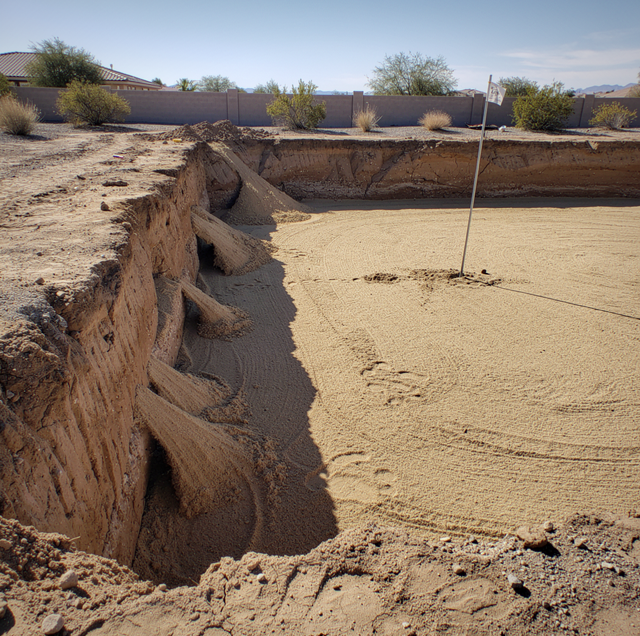
The Part of Court Construction Nobody Sees Later
Once a court is finished, every visible detail is above the slab: the color coat, the lines, the net, the fence. None of that is what actually keeps the court flat and crack-free for the next twenty years. That job belongs to the sub-base, the layer of compacted material sitting between the native soil and the concrete or asphalt slab, and it's finished and buried before anyone ever steps onto the surface.
A sub-base does two jobs at once. It spreads the weight of the slab and everything on it evenly across the ground below, giving that ground a stable, predictable layer to sit on rather than relying on whatever the native soil does on its own. When a court cracks, heaves, or develops a birdbath dip where water pools after every rain, the coating is usually blamed first because it's visible. The actual cause, in a large share of those cases, traces back to a sub-base that wasn't excavated deep enough, wasn't compacted to the right density, or wasn't suited to the soil type it was built on.
Soil type is where that last point gets specific. A sub-base built the same way regardless of what's underneath it is a sub-base built to fail on at least some lots, because sandy soil and clay-heavy soil behave in almost opposite ways once weight and moisture get involved.
Sandy Soil vs. Clay: Two Different Construction Problems
Clay-heavy soil holds water and swells when it's wet, then shrinks and cracks as it dries out. That swell-shrink cycle is what drives much of the seasonal heaving and settling problems seen on courts built over clay, and dealing with it usually means over excavating deeper and building in greater allowance for that soil's movement over time.
Sandy soil doesn't swell or shrink the same way, because water passes through it instead of being absorbed into the soil particles themselves. That gives sandy soil a real drainage advantage: water doesn't sit against the sub-base or the bottom of a slab the way it can in denser, less permeable ground. Less standing moisture at that depth means less freeze-thaw or wet-dry cycling that gradually breaks down the base layer from beneath.
The tradeoff is compaction behavior. Sand particles are loose, rounded, and don't lock together under pressure the way angular clay particles or crushed aggregate do. Left uncompacted, or compacted without enough attention to method and moisture content, sandy soil can shift and settle unevenly under the ongoing weight and vibration of a slab, foot traffic, and years of thermal expansion and contraction in the concrete above it. That shifting is exactly what a sub-base is supposed to prevent, so on sandy ground, getting the compaction step right carries more of the overall stability burden than it does on denser soil types.
In practice, this means sandy soil isn't a lesser construction challenge than clay. It's a different one, trading a moisture problem for a compaction and stability problem, and it calls for its own approach rather than a generic one borrowed from denser ground.
Excavation Depth: Building Down Before Building Up
Proper sub-base prep starts with removing native sandy soil to a depth that accounts for both the aggregate base layer going in above it and any additional soil movement the site might see over time. Skimping on excavation depth to save time is one of the more common shortcuts that shows up years later as an under-supported slab because there simply isn't enough compacted material between the surface and the loose native sand to distribute the load properly.
Excavation on sandy sites also has to account for the fact that loose sand doesn't hold a clean, stable trench wall the way clay or loam does. Sidewalls can slough or slump during excavation if they aren't managed carefully, which is part of why sandy-soil excavation calls for more attention to sequencing and shoring than a comparable dig in firmer ground.
Aggregate Base Layer: Selection and Compaction
Once excavation reaches the right depth, an aggregate base layer is placed, typically a crushed, angular material rather than smooth or rounded stone, specifically because angular particles interlock under compaction in a way rounded aggregate can't. That interlock is what gives the base its load-bearing strength, and it matters even more on sandy sites, where the native soil beneath the aggregate isn't providing that same locking behavior on its own.
The aggregate goes down in measured lifts, thin layers compacted one at a time with mechanical compaction equipment, rather than dumped in all at once and compacted from the top down. Compacting in lifts lets each layer reach proper density all the way through, instead of leaving a dense crust on top sitting over a loose, under-compacted layer underneath, a shortcut that looks fine at handoff and fails a few seasons later. Moisture content during compaction matters as well: aggregate that's too dry won't compact to full density, and aggregate that's oversaturated can behave almost like sandy soil itself, resisting the interlock that gives the base its strength.
Compaction is typically verified with density testing at this stage, providing a measurable target rather than a visual estimate of whether the base is ready to build on.
Geotextile Fabric: Keeping the Layers Separate
On sandy soil specifically, one added step matters more than it does on denser ground: geotextile fabric laid between the native sand and the aggregate base layer above it. Fabric acts as a barrier, allowing water to pass through while preventing the aggregate base material from migrating downward into the sand below and fine sand particles from working their way up into the aggregate over time.
Without that separation layer, gravity and repeated moisture cycling, even the modest amount that comes through fast-draining sandy soil, can slowly mix the two layers at their boundary. Once that mixing happens, the aggregate base loses some of its compacted density right where it needs to be strongest, since it's no longer a clean, uniform material doing the interlocking work it was installed to perform. Geotextile fabric is a comparatively low-cost step during construction, and it's specifically aimed at a failure mode that occurs almost exclusively in sandy or other well-draining soil types, which is why it gets called out separately from standard base prep rather than treated as optional for this soil type.
What Happens Downstream If This Step Gets Skipped
A slab poured over a rushed or improperly compacted sub-base on sandy soil doesn't usually fail all at once. It settles gradually and unevenly, since loose or poorly compacted sand under one section of slab compresses at a different rate than the ground under an adjacent section. That uneven settling is what eventually shows up as a slight but noticeable slope in one corner of a court, or a low spot where water starts pooling after every rain instead of draining the way the surface was designed to.
Once the slab is settling unevenly, cracking tends to follow. Concrete and asphalt have very little ability to flex without breaking, so when the ground supporting one section moves relative to another, that difference in movement gets transferred straight up into the slab as a crack. Acrylic surfacing over the top can't stop this from happening, since the coating is a thin, flexible finish layer, not a structural one; it will telegraph whatever the slab and the base underneath it are doing, sooner or later.
The furthest end of that chain is a court needing a section rebuilt rather than resurfaced, which means removing the affected slab, re-excavating, properly compacting a new sub-base with the geotextile separation this time, and pouring new concrete or asphalt before resurfacing can even begin. That's a materially larger project than the sub-base prep would have been the first time around, which is the core argument for getting this step right during original construction rather than treating it as something a future coating can fix.
Why This Isn't a Step Worth Compromising On
Sub-base prep is invisible the day a court is finished and for years afterward, right up until it isn't. Specifically on sandy ground, the drainage advantage of that soil type only pays off if the compaction and separation steps are handled correctly, because loose, uncompacted sand under a slab creates its own settling risk even where moisture was never the problem. A properly excavated, compacted, and fabric-separated base is what lets a court age the way it's supposed to: flat, draining correctly, and free of the cracking that traces straight back to ground movement rather than anything wrong with the surface itself.
Frequently Asked Questions
No. It needs a different emphasis, not less work overall. Sandy soil generally avoids the swell-shrink moisture problems associated with clay, but it requires more careful compaction and typically a geotextile separation layer to prevent the base material from migrating into the sand beneath it.
Depth depends on the specific site, the aggregate base thickness being used, and the slab type planned above it, but excavation on sandy soil generally needs to go at least as deep as on denser soil, since the base still has to reach a properly compacted layer capable of supporting the slab regardless of what's underneath it.
Good drainage and stable layer separation are two different things, and one doesn't substitute for the other. Fabric is there to keep the aggregate and native sand from mixing at their boundary over time, a slow process that happens even on well-draining ground, so skipping it trades a small upfront cost for a real risk to base stability later.
Compaction is typically verified with density-testing equipment, which provides a measurable percentage relative to the material's maximum achievable density, rather than relying on a visual or feel-based check of the surface.
No. Settling from an inadequate sub-base is often gradual, first appearing as a subtle slope or a spot where water lingers a little longer after rain, well before it progresses to a visible crack in the slab or the coating above it.
No. Resurfacing addresses the coating layer only. If settling or cracking is coming from the sub-base, a new coat of acrylic will look good briefly and then show the same issue again, since the underlying movement was never corrected.
Schedule a site and soil evaluation — get a professional read on sub-base requirements before any concrete goes down. CourtMaster Sports, Inc. serves the Coachella Valley and Las Vegas. Call (760) 548-3535.
