
How Long Does It Take to Build a Court? The Real Timeline
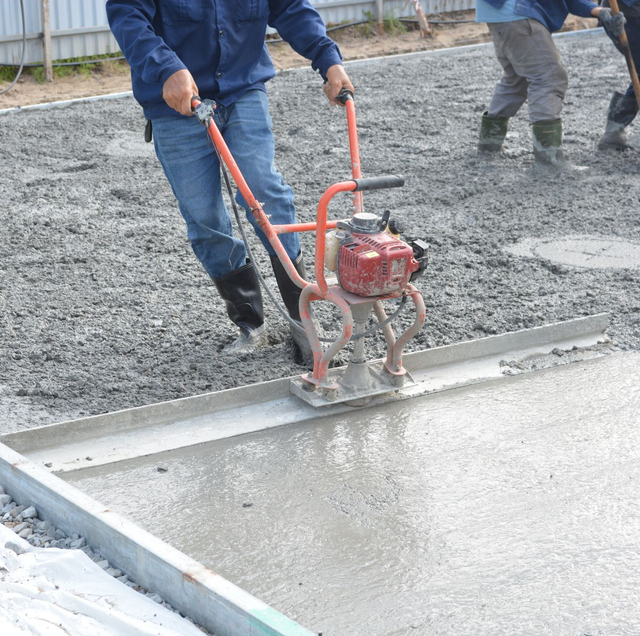
Quick Answer: Building a sport court typically takes several weeks from excavation to first play, and the stages run in a fixed order: design and permitting, excavation and grading, base construction, the concrete cure, acrylic surfacing, and finishing. The concrete cure is the largest fixed wait at roughly 28 days, and weather can extend surfacing and grading on either end. Design and permitting are the most variable stage and often the longest.
The honest answer to how long a sport court takes is that most of the schedule is spent waiting, not working. A crew can excavate, form, and pour a slab in a matter of days, then everyone stands back and does nothing to it for about a month while the concrete cures. That waiting is not padding or slow scheduling. It is chemistry, and it sets the pace of the whole project. Understanding where the fixed waits fall, and where the flexible ones live, is the difference between a realistic expectation and a frustrated one.
A tennis, pickleball, or basketball court is built in a fixed sequence, and each stage depends on the one before it being finished and stable. You cannot surface a slab that has not cured, you cannot pour a slab over a base that has not been compacted, and you cannot grade a site whose layout has not been set. Because the stages are dependent rather than parallel, the timeline is additive: the total is the sum of the stages plus the weather and decision delays stacked between them. From breaking ground to first play, several weeks is the normal window, and the single biggest fixed block inside it is the concrete cure.
The Stage Sequence Before the Clock
Before any timeline makes sense, the order of operations has to be clear, because each stage gates the next. A court is a dependent stack: layout sets the footprint, excavation and grading prepare the ground, the base carries the slab, the slab carries the surface, and the surface carries the play. Skip ahead or overlap the wrong two stages and the finished court pays for it in cracks or delamination.
That dependency is why a court cannot be rushed the way a paint job can. The stages are like courses in a meal that must be served in order, where the next dish cannot start until the previous one has fully set. Knowing the sequence first makes the durations that follow easier to place.
Design, Permitting, and Layout
This is the stage with the widest range, and it often runs longer than the physical build. Design covers court type and orientation, surface color, fencing, and lighting, and each decision left open stalls the paperwork. Permitting timelines depend entirely on the local jurisdiction and the scope of the work, and they are outside the builder's control. A simple residential court on flat, clear ground moves quickly. A court that needs grading plans, drainage review, or setbacks approved takes considerably longer.
Layout is the last step before machines arrive. The crew stakes the exact footprint, including the run-off margins beyond the play lines, sets the finished elevation, and marks the drainage direction. Getting decisions locked during this stage is the biggest lever a homeowner has over the schedule, because every open question here becomes a delay later.
Where the schedule actually hides: Owners tend to picture the timeline as the days they see crews on site, but much of the elapsed time is invisible: permit review sitting in a queue, a cure clock running with nobody present, a rain window pushing surfacing back. The visible work is a small fraction of the calendar. Planning around the waits, rather than around the work days, produces a realistic finish date.
Excavation and Grading
Once permits and layout are set, excavation is fast, often a few days depending on soil and access. The crew strips topsoil, roots, and soft organic material that would compress or rot and leave voids, then digs to a depth that leaves room for the full base and slab. Call 811 before any digging so gas, water, and electrical lines are located and marked. Skipping that call is how a routine dig becomes an emergency.
Grading tilts the exposed subgrade into a single shallow plane, roughly an inch of fall per ten feet, so water sheets off instead of ponding. The subgrade is then compacted so it will not settle unevenly later. Compaction and drainage have to be right at this stage, because a court built over soft or poorly drained ground heaves and cracks no matter how good the surface above it is.
Base Construction
The base is where two paths diverge, and they carry different schedules. One option is a compacted aggregate base, crushed stone spread in lifts and rolled dense, which then receives an asphalt surface. The other is a poured concrete slab over a compacted aggregate sub-base. The choice affects both durability and how long you wait before surfacing.
Asphalt goes down and can be walked on relatively quickly, but it needs a settling period, often around a month, before an acrylic system should be applied so the surface stops off-gassing and stabilizes. Asphalt is also more prone to softening and oxidizing over the years, which shows up as cracking sooner than concrete.
Concrete takes longer up front but rewards the wait with a more stable, longer-lived base. A standard reinforced slab and a post-tensioned slab both cure on the same chemical clock, but they behave differently over time. A post-tensioned slab uses steel cables tensioned after the pour to keep the concrete in compression, which resists the expansion-and-contraction cracking that temperature swings drive. It adds cost and a bit of coordination, and it is often chosen where ground movement or wide temperature ranges are a concern.
The Concrete Cure: The Biggest Fixed Wait
Here is the wait nothing shortens. Concrete gains strength through a slow chemical reaction called hydration, and it needs roughly 28 days to cure enough for an acrylic surfacing system to bond safely. The slab looks hard and walkable within a day or two, which is exactly the trap. Under that dry-looking surface, moisture is still leaving the slab for weeks, and acrylic coating laid over a green, damp slab has nowhere for that moisture to go.
Surfacing too early is one of the most expensive mistakes possible on a court. Trapped moisture pushes up under the coating and causes blistering, bubbling, and delamination, where the color layer lifts away from the concrete in sheets. The fix is not a touch-up; it is grinding off the failed surface and starting the coating over. The 28-day cure is not a suggestion a builder can trim to hit a date. It is the floor, and a good crew will test slab moisture before opening the first bucket rather than trusting the calendar alone.
Acrylic Surfacing
Surfacing is not one coat but a system of several, each needing dry time before the next. The typical order is a patch and leveling pass to fill low spots, an acrylic resurfacer to key the coating to the slab, then multiple textured color coats, and each layer has to dry and set before the following one goes on. Squeezed together over a few working days when conditions cooperate, this stage adds up because of the drying between coats rather than the labor of applying them.
Conditions are the variable here. Acrylic coatings bond within a moderate temperature and humidity band and need a dry surface. Apply them when it is too cold, too hot, or too humid, and the coating fails to cure and adhere properly, which shows up as poor color, soft spots, or peeling. That sensitivity is why surfacing is the stage most exposed to weather delay, and why a builder would rather wait for a clean window than force a coat into bad conditions.
Finishing and First Play
The last stage is the one that makes the court a court. Line striping is masked and painted to the exact dimensions of the sport, net posts and center anchors are set, nets are hung, and any perimeter fencing and lighting are installed. Fencing and lighting can run partly in parallel with earlier stages if footings were poured with the slab, which is one of the few places the sequence allows overlap.
Line paint needs its own short dry time before play, so first use is usually a day or two after the color coats are down and the lines are set. From there the court is ready, and the several-week total from the first stake to the first serve reflects mostly the cure and the coating dry times, not the days spent moving dirt.
What a homeowner can do to keep it moving: Two things sit within the owner's control and both matter. First, decide fast and decide fully: color, orientation, fencing, and lighting locked early keep permitting and layout from stalling. Second, keep the site accessible so crews and deliveries are not turned away, which quietly costs days. The fixed waits, the cure, and the weather cannot be hurried, so the way to protect the timeline is to remove every delay that is not fixed.
Frequently Asked Questions
Mostly no, because the stages are dependent, but fencing and lighting are the exception. If the post footings and conduit are placed during the slab pour, the fence and light structures can be assembled while the concrete cures, so that finishing work overlaps the biggest wait instead of following it. Line striping and net setting still have to wait for surfacing to finish.
Less than owners expect. A pickleball court has a smaller footprint, so excavation and coating cover less area, but the concrete cure is the same, roughly 28 days, regardless of size, and permitting does not shrink with the court. Because the cure is the largest fixed block and it is fixed no matter the dimensions, a small court and a large one finish only a few days apart.
It depends which stage is active. Rain during excavation can saturate the subgrade and force a pause until it dries enough to compact, since compacting wet soil gives a false density that settles later. Rain during the cure is largely harmless and can even help concrete hydrate. Rain during surfacing is the worst case, because the surface must be fully dry to coat, so a wet spell can push the acrylic stage back day for day until conditions clear.
Some mixes gain strength faster and can reach usable structural strength sooner, but the surfacing decision depends on moisture leaving the slab, not just strength. Even a rapid-strength mix has to release enough internal moisture before acrylic will bond, so the practical wait before coating stays close to the standard window. A moisture test, not the bag label, decides when it is safe.
Excavation, base work, and pouring can often continue in cold weather with proper mix design and curing precautions, but acrylic surfacing has a firm lower temperature limit and will not cure below it. In cold or wet months, the slab work can proceed while the surfacing waits for a run of warmer, drier days, which is why a court poured late in the year sometimes gets its color the following season.
A resurface skips the entire base and cure sequence because the slab already exists, so it is measured in days rather than weeks. The crew cleans and repairs the existing surface, then applies the same acrylic coat system with its drying intervals. The whole job usually turns around inside a week when weather cooperates, compared with the several-week timeline of building from bare ground.
Get a straight timeline for your court before you break ground — a clear schedule means no surprises between the first stake and first serve. CourtMaster Sports, Inc. serves the Coachella Valley and Las Vegas. Call (760) 548-3535.
