
How to Extend the Lifespan of an Outdoor Basketball Court
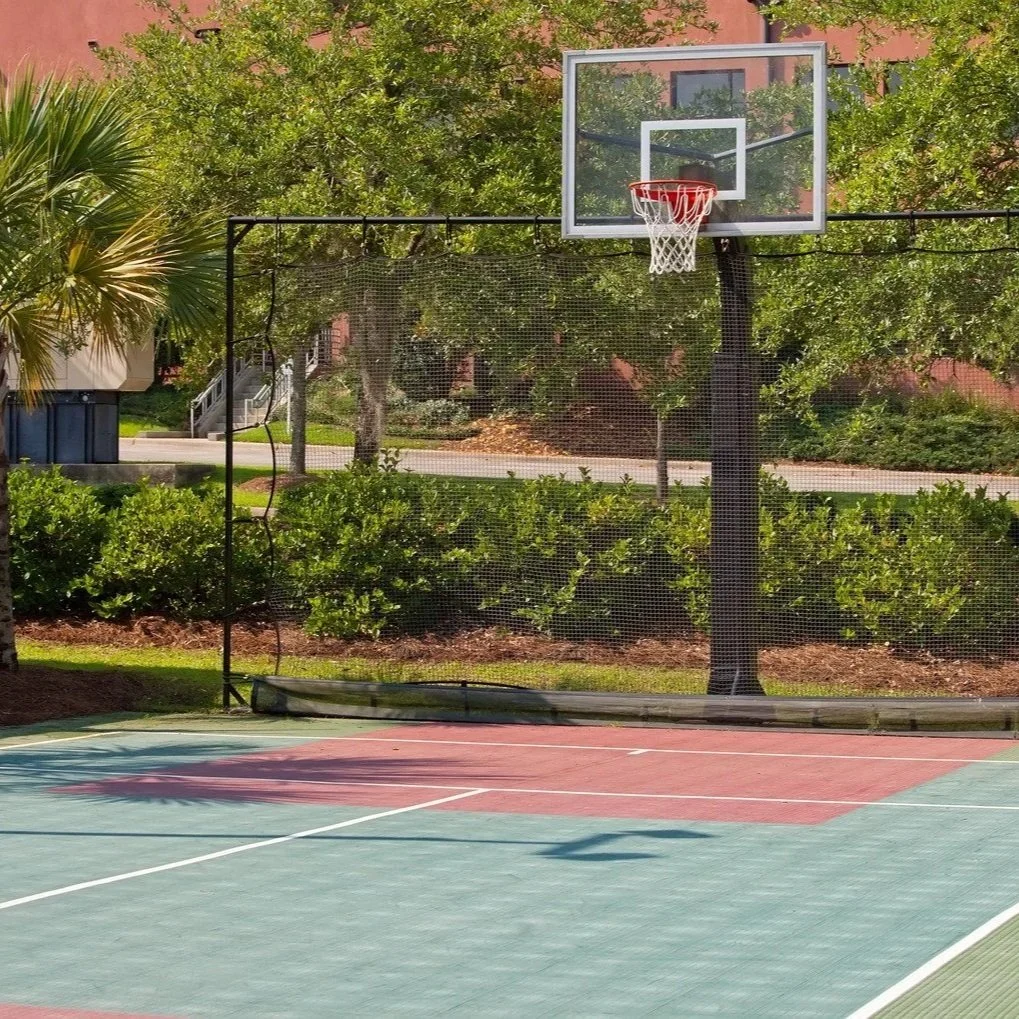
Professional maintenance teams spot early signs of wear while they work, enabling proactive planning rather than surprise repairs.
Routine Cleaning Keeps Debris From Becoming Damage
Leaves, dirt, pine needles, and bird droppings may seem harmless at first glance, but left unattended, they can accumulate moisture, promote mold growth, and mask surface wear. When debris settles into the textured surface of a basketball court, it begins to trap water and invite decay. Over time, those neglected corners start to show their age—and not in a charming, vintage-hoop kind of way.
Routine cleaning with gentle blowers, soft-bristled brooms, and water-friendly scrubbers helps maintain surface integrity. Professional maintenance teams spot early signs of wear while they work, enabling proactive planning rather than surprise repairs. Clean courts don't just look better—they play better and last longer.
Proper Drainage Prevents Water Damage
Water is the natural enemy of every outdoor basketball court. Without proper drainage, puddles form, surfaces weaken, and cracks widen. Even the most durable materials surrender eventually to water intrusion, especially in freeze-thaw climates where expanding ice splits the surface from the inside out.
Professionals design outdoor basketball courts with a built-in slope, usually between one and two percent, to encourage runoff. Surface drains, French drains, and surrounding grading all play a role in moving water away. If the drainage isn't working properly, resurfacing won't last. Addressing slope and water flow protects the investment and keeps the court playable year-round.
Resurfacing At The Right Time Keeps Problems Small
Resurfacing isn't just cosmetic—it's armor. Acrylic coatings, cushioned systems, and traction layers all serve as protection against UV rays, abrasion, and moisture. As the surface begins to fade, lose texture, or show patchy grip, it's time to schedule a professional evaluation.
Waiting too long allows micro-cracks to evolve into foundation-level problems. But catching wear early lets resurfacing crews clean, patch, and recoat the surface quickly. A fresh topcoat restores aesthetics and functionality while delaying major repairs. Regular resurfacing builds longevity, layer by layer.
Sealcoating Prevents UV Damage And Surface Breakdown
UV rays are relentless, especially in sunnier regions where outdoor basketball courts soak up sun year-round. Sealcoating applies a UV-resistant barrier that slows down fading, oxidation, and material fatigue. It's like sunscreen for the court—only without the greasy residue.
Professionals use sealcoats designed for basketball play, balancing grip with gloss and providing long-term protection without compromising traction. The application involves surface prep, crack treatment, and multiple coats for maximum coverage. A properly sealed court resists color fading, retains ball bounce, and holds off the brittle effects of prolonged sun exposure.
Crack Repair Stops Structural Damage Before It Starts
Cracks might look innocent when they first appear—thin, shallow, maybe just a few inches long. But those small fractures act like open doors for water, weeds, and insects. Each freeze-thaw cycle or rainy season compounds the issue. Soon, what was once a hairline becomes a canyon.
Professional crack repair goes beyond surface filler. Crews clean the crack, apply flexible compounds, and feather the area to avoid ridges or trip hazards. In some cases, mesh reinforcement or patch systems provide additional strength. Addressing cracks promptly keeps the base layer intact and reduces the need for full resurfacing later.
Line Striping Shouldn't Be Ignored
The lines on a basketball court aren't just decoration—they organize the game. When those lines fade, players adjust without even realizing it. Shots drift, spacing changes, and calls become subjective. Fresh, precise line striping restores gameplay accuracy and gives the court a crisp, professional appearance.
Re-striping should follow resurfacing or sealcoating, but can also be scheduled independently. Professionals use durable paint that adheres to the surface without bleeding or fading prematurely. Bright, clean lines also reflect pride of ownership and make any facility—residential or commercial—look ready for serious play.
Surface Sweeping Keeps the Bounce Predictable
Surface texture influences how the ball bounces, how sneakers grip, and how players move. When the court becomes littered with sand, dirt, or organic matter, the bounce gets weird, traction slips, and confidence takes a hit. Regular sweeping or light pressure washing helps preserve performance characteristics.
Professional surface cleaning doesn't involve power washers set to full blast. It's a measured approach using safe cleaning agents and low-pressure rinses. The goal is to preserve grip, color, and court markings without eroding protective layers. A predictable surface supports safe, enjoyable play—and fewer arguments about missed rebounds.
Perimeter Maintenance Protects The Surface
Everything that touches the edge of the court plays a role in its lifespan. Nearby tree roots can crack asphalt. Overgrown shrubs trap moisture. Invasive weeds push through expansion joints, creating uneven footing. Even mulch, gravel, and fence posts contribute to erosion if placed too close to the surface.
Maintaining the surrounding landscape keeps the court breathing properly. Professional teams evaluate grading, edging, and border integrity. Installing root barriers, trimming vegetation, and sealing transitions between court and soil prevent long-term damage. The best court isn't an island—it's part of a well-planned environment.
Basketball Hoops Need Love Too
Permanent hoop systems, especially those anchored in concrete, play a silent but powerful role in court health. Loose poles, rusted hardware, or wobbly backboards put stress on the court every time someone dunks. That pressure radiates through the base, leading to cracking or surface wear.
Professional inspections include pole anchoring, rim calibration, and hardware replacement. If the goal is adjustable, lift systems and lock mechanisms are checked and lubricated. A stable hoop doesn't just protect the players—it protects the court from uneven wear and mechanical strain.
Snow Removal Should Be Gentle, Not Aggressive
Snow and ice are seasonal enemies. Clearing them is necessary, but the tools used can either preserve the court or slowly destroy it. Metal shovels, snow blowers with aggressive blades, and rock salt all scrape, pit, or erode the surface.
Professional teams use rubber-edged shovels or snow pushers and recommend safe de-icing materials. When removal is handled correctly, the court stays protected through winter without losing surface integrity. Being gentle during the snow season pays off in the spring when the lines are still visible and the bounce is still true.
Scheduled Inspections Catch The Sneaky Stuff
Surface damage doesn't always announce itself. Sometimes, it's a subtle dip in the asphalt, a soft spot in the corner, or a thin crack hiding under court paint. Professional inspections bring a trained eye to the problem. Teams look for moisture intrusion, grading shifts, UV wear, and drainage inefficiencies.
Inspections also provide benchmarks. A court that's aging predictably can be planned for. A court with hidden flaws can be addressed before it collapses into an emergency. Routine assessments create peace of mind and keep the game going year-round without the sudden "Court Closed" signs.
Customized Maintenance Schedules Work Better Than Guesswork
Not all basketball courts age the same way. Some are used daily by schools or athletic leagues. Others support occasional games in residential backyards. Climate, location, and material type all impact wear rate and resurfacing needs.
Professional court service providers build custom maintenance schedules based on real-world use. A court that hosts weekend tournaments may need annual evaluations and biannual line striping. A private residential court may take several years, with only minor cleaning and a single resurfacing touch-up. Tailored care stretches budget dollars and keeps the court looking sharp.
Court Lighting Helps Extend Play Without Extending Wear
Outdoor lighting allows play to continue after sunset, but it also contributes to surface wear if not properly placed. Fixtures should be installed with appropriate beam angles and distances to avoid hot spots that concentrate heat or glare.
LED lighting offers an efficient, cooler alternative to metal halide fixtures—professionals position poles to maintain uniform coverage while reducing maintenance. Night play extends court use without extending surface stress—if lighting is installed by someone who knows the play environment.
Wind Barriers And Fencing Prevent Debris Intrusion
A good fence does more than keep the ball in play. It shields the surface from leaves, trash, and blowing debris that would otherwise accumulate in corners and seams. Wind barriers add privacy and reduce drying time after rain by controlling airflow.
Professionally installed fencing and barriers support surface health and enhance the playing environment. Materials are chosen to allow visibility while standing up to the elements, and installation methods prevent shifting, sagging, or ground pressure that could damage nearby asphalt or concrete.
An Outdoor Court Is A Living Surface
Every bounce leaves a mark. Every rainstorm tests the seal. Every cold snap challenges the structure. But with a little proactive care—and a whole lot of professional know-how—outdoor basketball courts age gracefully and perform beautifully long past their expected lifespan. When the court is maintained with purpose, it returns the favor with every shot, rebound, and game-winning buzzer beater.
CourtMaster Sports, Inc. offers a complete, one-stop solution for professional new court construction in Southern California and Southern Nevada, including pickleball courts, tennis courts, bocce courts, and basketball courts. Our licensed team services residential, commercial, and municipal court systems with a focus on quality construction, efficient coordination, and long-term performance. Start your court construction project today and get a professionally built surface you can trust.