
How LED Court Lighting Extends Evening Play in Hot Climates
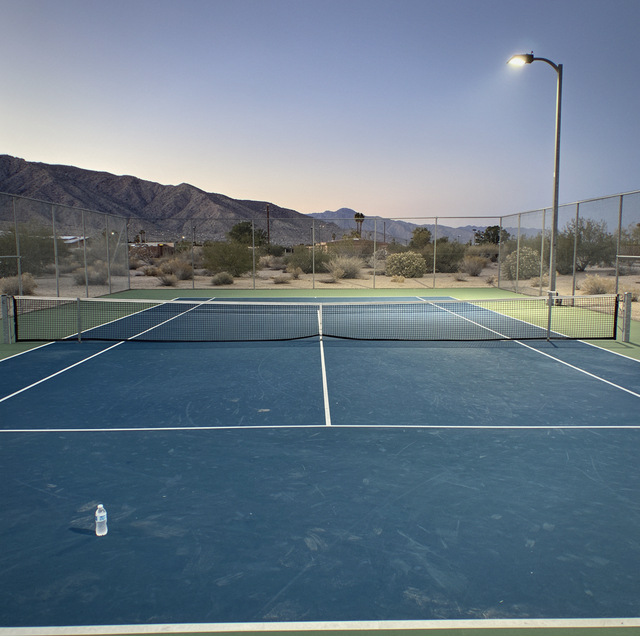
Why the Best Court Hours Move to After Dark
By late afternoon in a hot climate, a court that baked all day is still radiating heat back up off the surface long after the sun starts to drop. Anyone who has tried to rally on acrylic at that hour knows the air itself feels thick, the surface still burns through the soles of a shoe, and a match that would take an hour at 7 a.m. turns into a slog. So play shifts later, toward the two or three hours after sunset when the surface has finally cooled, and the air moves again. That shift only works if the court can actually be seen and played on once daylight is gone, which is the entire job of a purpose-built lighting system rather than a few floodlights bolted to a fence.
Good lighting design does more than let people see the ball. It determines whether a court gets used for two extra hours a night or sits dark once the sun goes down, and it does that through a handful of specific, measurable factors: how much light lands on the playing surface, how evenly it's spread, how much of it ends up as glare in a player's eyes instead of on the court, and how well the fixtures themselves hold up to months of heat exposure without losing output or failing early.
Lumens and Foot-Candles: How Much Light a Court Actually Needs
Court lighting is specified in foot-candles, a measure of how much light actually reaches the playing surface, not just how bright the fixture looks from underneath. Recreational and backyard courts typically call for lower foot-candle levels than a court used for competitive league play or night tournaments, where fast-moving balls and closer officiating demand more consistent light across the entire surface, including the corners and baseline areas that get less attention in a basic layout.
This is where lumens and foot-candles get confused. A fixture's total lumen output describes how much light it produces, but foot-candles measure how much of that light actually lands where players need it, once distance, fixture angle, and beam spread are factored in. Two courts lit with fixtures rated at the same lumen output can end up with very different playing conditions if one system spreads that light evenly across the surface and the other concentrates it near the poles, leaving the far service boxes noticeably dimmer. A court sized for foot-candles rather than raw lumens is the one that plays consistently from baseline to baseline, not just directly under the poles.
Glare Control: Why More Light Isn't Always Better Light
Adding fixtures or turning up output is the easy fix, and it's usually the wrong one. Past a certain point, more raw light does not mean better visibility. It means more glare, and glare is what actually ends a night session, not darkness. A player tracking a lob against a fixture positioned in the wrong spot loses the ball in a wash of brightness at exactly the moment they need to see it most.
Glare control comes down to fixture optics and angle, not fixture count. Well-designed sports lighting uses shielded or asymmetric optics that direct light down onto the court and away from a player's typical sightlines, rather than throwing light outward in every direction, as an unshielded floodlight does. Mounting height and aiming angle matter just as much: a fixture mounted too low or aimed too flat across the court rather than down onto it puts light directly at eye level for anyone standing on that side of the court. A generic floodlight lights the court. A purpose-built fixture lights the court without also lighting up the players' eyes.
Fixture Placement and Pole Height: Getting Even Coverage
Where fixtures sit, and how high they're mounted, has more influence on usable court hours than almost any other single design choice. Placement is typically planned around the sport being played and the size of the surface: a single tennis court generally uses poles positioned along the sides at a specific mounting height and offset from the lines, calculated so that the beam pattern from each fixture overlaps its neighbor enough to avoid dark bands between light pools. Pickleball, played on a smaller surface with a faster, lower-flying ball, often calls for a tighter fixture pattern and closer attention to cross-court glare, since players stand closer to the net and to each other than they do on a full tennis court.
Multi-sport surfaces complicate this further. A court striped for both tennis and pickleball, or shared with basketball, needs a lighting layout that serves the largest surface configuration without creating dead zones when the court is used in its smaller format. Getting pole height and spacing wrong in either direction causes real problems: too low, and shadows fall across the court every time a player moves between a fixture and the surface; too high or too widely spaced, and the light spreads thin, dropping foot-candle levels below what fast-paced play needs, especially near the corners and along the baseline where the ball travels lowest and fastest.
Color Temperature and How It Affects Ball Visibility
Color temperature, measured in Kelvin, changes how a ball reads against the court surface and the night sky behind it. Cooler, bluer-white light in roughly the 5000K to 5700K range tends to render fast-moving objects with sharper contrast than warmer, yellow-toned light, which is part of why most sport-specific LED fixtures are built at the cooler end of that range rather than matched to typical residential lighting. A yellow-green tennis ball or a bright pickleball tracks more clearly against the surface under this kind of light, particularly at the speed a serve or a smash actually moves.
This matters more at night than it does at dusk, when ambient light still fills in some of the contrast naturally. Once full darkness sets in, the fixture's color rendering is doing the entire job of separating the ball from the background, and a mismatched or inconsistent color temperature across different fixtures on the same court- something that can happen when older and newer lamps are mixed on one system- creates visible unevenness that a player notices immediately even without knowing why the court looks off.
LED Versus Older Lighting: The Heat and Energy Difference
Metal halide and high-pressure sodium fixtures, still common on older court installations, run hot at the lamp and ballast, lose a meaningful share of their input energy as heat rather than usable light, and typically need warm-up and re-strike time after any power interruption, meaning a brief outage can leave a court dark for several minutes while the lamps cycle back up. That heat output at the fixture compounds an already difficult thermal environment in a hot climate, adding load nearby and shortening component life through repeated heat cycling on top of outdoor temperatures already pushing components hard for much of the year.
LED fixtures convert a larger share of their input energy into light rather than heat, operate at lower temperatures within the fixture, and reach full output instantly rather than requiring a warm-up period. That instant-on behavior matters for evening play scheduling: a court can be switched on right as the sun sets and reach full brightness immediately, rather than needing the lights to run ahead of time to avoid a dim start. LED systems also tend to maintain consistent output for a much longer service life before the light noticeably dims, which matters on a court that gets heavy use, especially because daytime hours are less appealing during a long, hot season.
Heat resistance in the fixture housing and driver components is a real design consideration separate from light output itself. Fixtures and drivers rated for extended high-ambient-temperature operation hold their output and lifespan far better on a pole exposed to full sun most of the day than components built for a milder climate, which is one of the less visible but more important factors in whether a lighting system keeps performing years into ownership rather than dimming or failing early.
Controls, Zoning, and Getting the Timing Right
A lighting system that turns on and off manually, or that runs on a single all-or-nothing switch, wastes both energy and fixture life on a court that doesn't need full output the entire evening. Zoned controls, letting one section of a multi-court layout run while another stays off, or letting output step down slightly once a session moves from competitive play into casual rallying, match energy use to actual demand rather than lighting an entire facility for one match on one court.
Astronomical timers, programmed to track actual sunset time rather than a fixed clock setting, keep a court lit exactly through the hours when natural light fades and darkness sets in, without turning on too early and wasting energy in daylight or turning on late and leaving players in the dark for the last few minutes of dusk. Since sunset time shifts by several minutes each week with the changing seasons, a fixed on/off schedule drifts out of alignment within weeks, while a system tied to actual sunset stays accurate without ever requiring a fixture to be adjusted by hand.
What Extended Evening Hours Actually Look Like on a Well-Lit Court
Put these factors together, and the result is a court with the right foot-candle levels, controlled glare, well-placed fixtures, and heat-tolerant LED components that can extend usable playing hours by several hours every evening, night after night, through the stretch of the year when daytime heat makes midday play uncomfortable at best. That's not a marginal gain. For a court that otherwise sits idle during the hottest part of the day, well-designed lighting is often the difference between a facility that sees real use and one that only sees traffic in the cooler months.
None of this happens by accident from a generic fixture bought off the shelf and mounted at a convenient height. It comes from treating lighting as a design problem tied to the sport, the surface size, and the climate the court sits in, just as surface material and drainage are planned around those conditions.
Frequently Asked Questions
Recreational and backyard courts generally need lower foot-candle levels than competition courts, since casual play doesn't demand the same precision on fast-moving shots. The exact target depends on the sport, the court size, and how the space is used, which is why a lighting layout is typically calculated for the specific court rather than borrowed from a generic recommendation.
Yes, in several ways players notice directly. LED reaches full brightness the instant it's switched on instead of needing warm-up time, holds consistent output for a longer service life before dimming, and runs cooler at the fixture, which matters in a climate where heat already puts stress on outdoor equipment.
Sometimes, but a straight swap doesn't always solve glare or coverage problems if the original pole placement and mounting height were designed around older fixture optics. Getting the full benefit usually involves reviewing placement and aiming alongside the fixture upgrade, not just replacing the lamp type in the existing positions.
Players are tracking a small, fast-moving object at close range, often while looking toward the direction a fixture is aimed. Glare that would be a minor annoyance walking across a lit parking area becomes a real visibility problem when it washes out the exact spot a player needs to focus on to judge a shot.
Yes. Cooler, bluer-white light renders fast-moving balls with more contrast against the court surface than warmer yellow-toned light, which is why sport-specific fixtures are typically built toward the cooler end of the color temperature range rather than matched to standard residential lighting.
It depends on the layout and sunset timing, but a well-lit court commonly adds several extra hours of comfortable, playable time each evening, especially through the part of the year when daytime heat makes midday and early-afternoon play impractical.
Request a court lighting design consultation — get a layout matched to your court size and sport, built for glare control and heat-tolerant LED performance. CourtMaster Sports, Inc. serves the Coachella Valley and Las Vegas. Call (760) 548-3535.
