
What Causes Cracks in an Outdoor Court, and Can They Be Stopped?
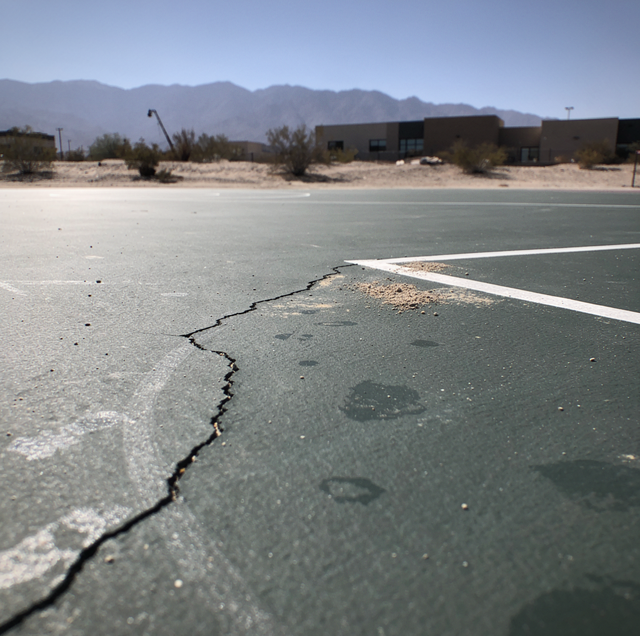
A serve that used to skid true off the baseline suddenly dies flat, or kicks sideways in a way it never has before. Looking down, you find a thin dark line running across the acrylic surface, maybe following the seam of an old expansion joint, maybe cutting diagonally across the service box for no obvious reason. The paint looks fine everywhere else. The color is even. So it's tempting to treat that line as a surface problem, something a fresh coat of acrylic can paint over.
That assumption is usually wrong, and it's the single most common reason court crack repairs fail to hold. Acrylic surfacing is a thin, flexible coating system applied over a concrete or asphalt slab. It isn't the structure. It's the finish. When a crack shows up in that finish, it's almost always a message from the slab underneath, telling you that something moved down there first.
Where Cracks Actually Begin: The Base, Not the Coating
A sport court's acrylic surface has almost no ability to bridge a gap on its own. It's built to flex slightly with temperature and to hold color and texture, not to span a structural separation in concrete. So when the concrete or asphalt base cracks, whether from a settling sub-base, soil movement underneath, or the slab simply expanding and contracting through seasonal temperature swings, that movement has nowhere else to go. It travels straight up through every layer of acrylic coating above it until it reaches the surface you can see and step on.
This upward path is sometimes called crack telegraphing, and it explains why a court can look flawless the week after resurfacing and then show the exact same crack line eighteen months later, in the exact same spot. If the base crack wasn't addressed before the new coating went down, the old crack was never gone. It was just covered.
Sub-base movement is one of the most common drivers of this: the layer of compacted material beneath the slab settles unevenly, often because of soil type, moisture changes, or inadequate compaction when the court was originally built, and the concrete above it cracks in response.
Post-Tension Concrete vs. Standard Concrete: A Prevention Factor
How a court's slab was built in the first place has a lot to do with how well it resists this kind of cracking later.
Standard concrete slabs rely on their own mass and, sometimes, rebar reinforcement to resist cracking. In soil that shifts, whether due to expansive clay content or a loose, sandy sub-base, a standard slab has limited ability to move without cracking. Once soil beneath it settles or heaves, the rigid slab is forced to accommodate that movement the only way it can: by fracturing.
Post-tension concrete construction takes a different approach. Steel cables are run through the slab and tensioned after the concrete has cured, which puts the entire slab under compression. That compression gives the slab greater resistance to the pulling and separating forces caused by soil movement beneath it. It doesn't make a slab immune to cracking forever; nothing outdoors is, but it meaningfully changes how the slab responds to ground movement over its lifespan, which is why it's a standard part of new court construction in areas where sub-base conditions call for it.
This matters for crack prevention specifically because it addresses the problem at its source. Acrylic coating choices, color coats, and cushioned systems all affect the surface layer. Post-tension construction affects whether the base cracks in the first place.
Hairline Crack or Structural Crack? How to Tell the Difference
Not every crack means the same thing, and the fix depends entirely on which type you're looking at.
Hairline surface crack: A thin line, usually less than about a sixteenth of an inch wide, that doesn't shift or separate when you press on either side of it with your foot. These are typically confined to the acrylic coating and the very top of the concrete, driven by surface-level expansion and contraction rather than a structural break in the slab. A crack repair product designed to bridge minor movement, followed by resurfacing, usually resolves these for a meaningful stretch of time.
Structural base crack: A wider crack, one where you can feel a height difference between the two edges, or one that continues to widen season after season. This kind reaches into the concrete or asphalt itself. Painting or coating over it without addressing the base first is nearly guaranteed to fail because the slab underneath is still moving. These need the base itself patched or repaired, with the crack properly routed out, filled, and stabilized, before any new acrylic goes down over it.
A simple field test: run a fingernail or a coin edge across the crack. If you can feel a lip or ridge where one side sits higher than the other, you're looking at a structural issue, not a cosmetic one, no matter how thin the visible line looks from a few feet away.
Heat and UV: A Separate Force at the Surface Level
Base movement is one driver of cracking. Heat and ultraviolet exposure are a second, largely independent one, and courts that get long hours of direct sun deal with both at once.
Acrylic coatings expand and contract daily as surface temperatures swing from very hot afternoons to much cooler nights. That thermal cycling occurs in the surface layer itself, separate from whatever the underlying slab is doing. Over years of repeated expansion and contraction, the acrylic coating becomes more brittle and prone to fine surface cracking and color fading, even on courts where the base slab is stable and hasn't moved at all.
UV exposure adds to this by breaking down the acrylic binders that hold the color coat together, which is also why resurfacing on a roughly five- to seven-year cycle is standard on courts under heavy UV and heat load, independent of any crack issue. A court may need a fresh coat purely because the old one has faded and become brittle from sun exposure, with no underlying problem at all.
The two mechanisms often appear together, which is part of why correctly diagnosing a crack matters. A surface-level, heat-driven hairline crack calls for a very different fix than a structural crack coming up from a shifted sub-base, even though both can look similar to the eye.
Sandy Soil and Ground Movement: Where the Chain Starts
Where a court sits on sandy soil, sub-base conditions are part of why cracking is common enough to plan for. Sandy soil doesn't hold compaction the same way denser soil does, and it can shift with moisture changes from irrigation, rare heavy rain, or even landscaping changes near the court. When the sub-base under a slab isn't stable, the concrete above it has less to rely on, and that's before ordinary thermal expansion and contraction of the slab itself is factored in.
This is why proper sub-base preparation during original construction, combined with a slab design suited to the soil conditions on a given lot, has more influence on long-term crack resistance than anything applied to the surface after the fact. A resurfacing job can restore color and playability. It can't undo an inadequate sub-base.
Can Cracks Actually Be Stopped, or Only Managed?
Once a crack has appeared, especially a structural one, it can be repaired and stabilized, but the honest answer is that outdoor courts built on concrete or asphalt over shifting ground will likely see some cracking again at some point. The goal of proper repair isn't a permanent, guaranteed end to all future cracking. It's slowing the rate, controlling where it happens, and keeping small cracks from turning into court-wide problems.
A base crack that's routed, filled with a flexible or semi-rigid patching compound, and allowed to cure properly before resurfacing will typically hold far longer than one that's simply painted over. Court-wide resurfacing after a base repair also gives you a chance to check for related surface issues, like birdbath puddling (low spots where water pools after rain or irrigation overspray), that often show up in the same areas as movement-related cracking, since both point back to uneven settling in the base.
What Happens If a Growing Crack Gets Ignored
A hairline crack left alone doesn't stay a hairline crack forever. Water works its way into the opening and sits against the slab edge, and the daily expansion and contraction of the surrounding surface widens the gap a little with each cycle — and where nights drop below freezing, water in the crack expands as it freezes, prying it open faster. Eventually, the crack reaches a point where it's no longer a coating issue at all: it's undermining the base, allowing moisture to reach the sub-base, and accelerating the very soil movement that likely started the crack in the first place.
Left unaddressed long enough, a single structural crack can also become a safety and playability issue, catching a shoe edge or a low-bouncing ball at the wrong moment. Catching it while it's still a hairline and getting the base checked before it is what keeps a repair simple instead of turning it into a section of court that needs full reconstruction.
Frequently Asked Questions
Small, isolated hairline cracks can sometimes be spot-repaired and blended into the existing coating without a full resurface, but color matching an aged, sun-faded surface with a small patch is difficult, and most structural repairs disturb enough surrounding acrylic that a full resurface of at least that section is the more reliable route.
Base crack repair uses a separate flexible patching or crack-filler compound, not the acrylic color coat itself. The routed channel is typically cut to a specific profile, often a shallow V or a square kerf roughly 1/4 inch wide, which provides the filler with a bonding surface on two faces of the crack rather than just the surface skin. Some repair systems also add a fabric or membrane crack-bridging layer over the patch before the color coat goes on, which is part of why a properly repaired line often stays invisible longer than a straight filler alone.
Curing times depend on the specific patching compound and current weather conditions, but base repairs generally require at least a few days of stable, dry conditions before acrylic coats can be applied. Applying color coat over an undercured patch is one of the more common reasons a repair fails within a single season.
Yes. Areas where posts, sleeves, or fence footings are set into the slab create small structural interruptions in the concrete, and those points concentrate stress differently than an open, unbroken slab area, making cracking somewhat more common near hardware penetrations.
Darker color coats tend to make hairline cracking more visually obvious than lighter colors, since the crack line and any patch material contrast more sharply against a dark background, even when the actual structural condition is identical.
Yes. Puddling is caused by low spots in the slab from uneven settling, and a section of court can develop a birdbath dip long before that same settling produces a crack you can see, which is why standing water after rain or irrigation is worth having checked even if the surface still looks crack-free.
A Court That Ages on Its Own Terms
Cracking on an outdoor court isn't a sign that something went wrong so much as it's a sign of what outdoor courts naturally deal with: ground that moves, sun that never really lets up, and concrete or asphalt doing its best to hold steady underneath a coating that was never meant to carry that load on its own. Catching the difference between a cosmetic line and a structural one early is what keeps a court playable for decades instead of turning one bad season into a full rebuild.
Schedule a court crack inspection — get a professional look at whether that crack is surface-level or reaching into the base, before it spreads. CourtMaster Sports, Inc. serves the Coachella Valley and Las Vegas. Call (760) 548-3535.
